Building developer communities starts with understanding what developers actually need. interop.io had been serving technical teams for years. Their customers were solving complex integration problems every day. A developer community felt like the natural next step, but the team needed a clear starting point and a plan that fit their reality. That is where Stateshift came in.
They wanted a focused space that helped customers solve real implementation challenges. Not noise, not a splashy launch moment. A community that worked quietly and effectively in the background, giving developers the clarity they needed without adding friction to anyone’s week.
During this early strategy phase, Toni stepped in as the person who would shape and publish the community’s content. His role made the upstream strategy even more important. If the system didn’t support his workflow, the community would stall before it ever got traction.
Before launching anything, we worked with Interop’s product and customer teams to uncover what would genuinely matter inside the community, how to make content sustainable for Toni, and how the team would measure progress without guessing.
This case study walks through exactly how that foundation came together — and what other technical teams can learn from it.
When building developer communities, three elements consistently determine early success: grounding content in real developer challenges, creating a workflow your team can sustain, and tracking simple engagement signals that show whether developers are getting value. This is the approach Stateshift used when partnering with interop.io.
Clarity Before Content
Stateshift’s work on building developer communities focuses on matching real developer needs with workflows teams can actually sustain.
When Interop first began evaluating their community strategy, their team already had strong ingredients: a powerful product, engaged customers, and years of deep technical expertise. What they didn’t yet have was a way to translate that internal knowledge into a structured, searchable experience developers would actually use.
The early work centered on three questions:
• What problems do developers actually need help solving
• How do we keep content consistent without adding heavy workload
• What should we measure so we know things are working
Those answers shaped everything that happened next.
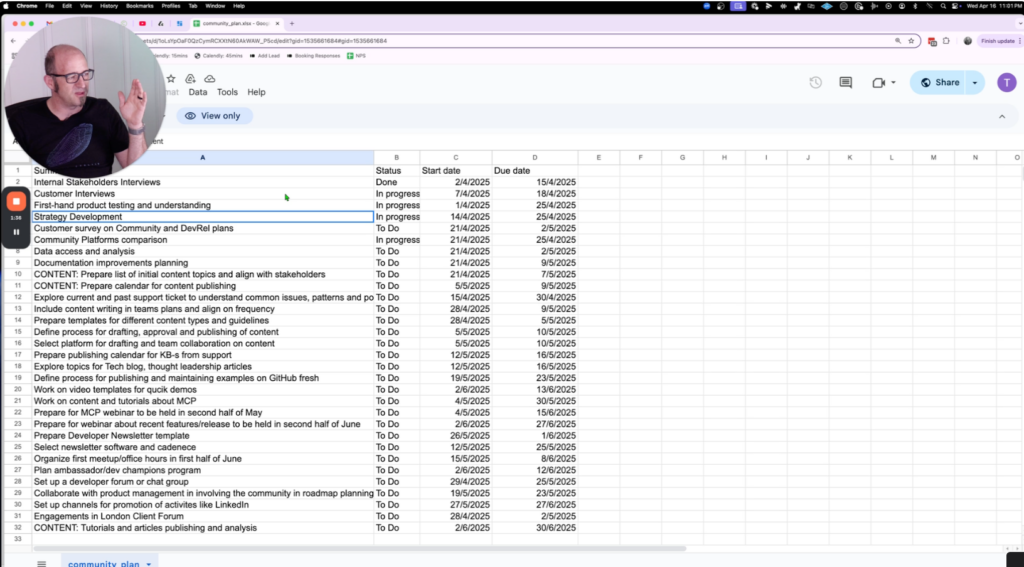
During the initial planning phase, Jono walked through a six-month strategy map with Sara, who was leading Interop’s community initiative. The goal was to give Interop clarity on how content themes, engagement metrics, and early workflow decisions would fit together long before anyone posted a single message.
Understanding What Developers Actually Needed
Interop’s developers weren’t looking for broad advice. They wanted clear paths through the implementation challenges they were already facing and guidance that helped them move faster with fewer blockers.
In our early working sessions, we reviewed support conversations, onboarding questions, and documentation patterns to identify where developers were consistently getting stuck. That analysis revealed clear, high-value themes:
• Practical implementation guidance
• Troubleshooting common integration blockers
• Examples from real implementations
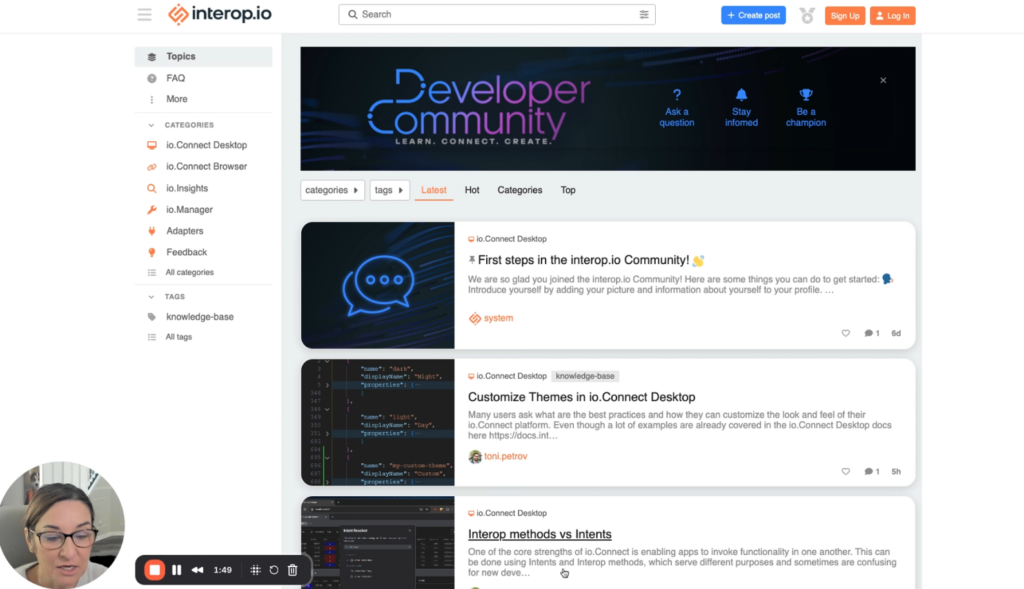
This clarity mattered because Toni was preparing to own the content engine. Before this work, he was drafting posts based on scattered notes and assumptions. Afterward, he had a reliable, evidence-backed content direction grounded in real customer needs. When the initial Interop Discourse community went live, Mindy recorded a walkthrough and provided feedback on onboarding flow, category structure, and how to shape the first wave of posts so Toni could move faster with confidence.
Build a Workflow the Team Can Sustain
A consistent community presence depends on workflow, not heroics.
From the start, Toni faced a challenge common to many technical teams: he often needed deeper engineering context before he could publish genuinely helpful engineering guides. Chasing that knowledge slowed everything down and made content creation heavier than it needed to be.
We suggested a simple fix Interop could test: have an engineer record a short voice note sharing the technical details Toni would need. Two or three minutes of context is often enough to complement what documentation or code samples are missing.
Interop is still rolling this out, but even partial experiments eased the load. Engineers stayed focused on product issues, Toni gained clarity without adding hours to his workflow, and the community benefited from practical content.
Around this workflow, we also helped introduce:
• Lightweight templates for technical questions
• A simple editorial rhythm tied to real capacity
• A realistic publishing cadence
The result was a content system the team could actually maintain.
Sustainable workflows like these are central to building developer communities that don’t rely on constant heroics or unrealistic publishing expectations.
Focusing on Engagement Signals That Matter
Interop didn’t need vanity metrics. They needed indicators that showed whether developers were getting value — and whether the community was helping reduce friction in support and onboarding.
We helped them define two simple engagement signals tied to meaningful outcomes:
1. Newsletter-to-community conversions
They already had an active email list. Tracking how many readers clicked into and joined the community gave them a clear acquisition metric.
2. Active member behavior
Instead of counting all registered users, we tracked actions that showed real value: logging in, reading posts, contributing answers, and coming back.
This created an early but meaningful feedback loop that helped the team see what was working.
Review, Adjust, and Build Confidence
Review cycles were the engine behind the progress. Interop worked in short loops: publish, measure, adjust, repeat. No heavy dashboards. No long analytics reports. Just patterns, decisions, and small improvements that compounded over time.
Every couple of weeks, the team reviewed:
• Which posts drew repeat engagement
• Where questions clustered
• What slowed content down internally
This rhythm gave Toni clarity on what to write next, helped Sara see how the community supported customer success, and kept the work manageable.
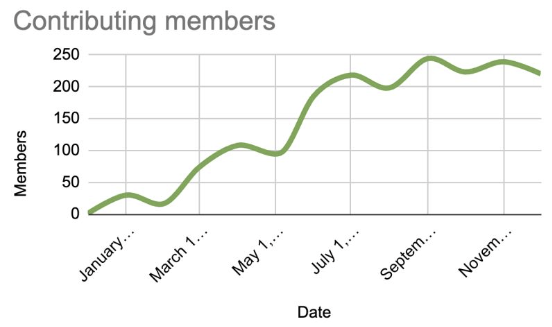
That steady cadence began to reflect in the numbers. The chart below shows total members in the Discourse community over the first stretch of activity. What makes this impressive isn’t raw volume. It’s who those members represent.
Before we even looked at the numbers, one thing was already clear. Interop’s developers trusted the team. They had a long history of working side-by-side with customers, which made a community space feel like a natural extension of how people already interacted with them.
When we compared the community roster with Interop’s estimated customer base, it showed that a meaningful share of eligible developers had already joined. The chart below comes from Stateshift’s metrics tracker and reflects the steady onboarding pattern we saw during the first phase of the engagement. For a technical community built from scratch, early participation at this level is a strong sign that developers saw immediate value in having a shared space.
What Happened After Five Months
By the five month mark, Interop had:
• A live Discourse community aligned to customer needs
• A growing base of active members
• Consistent content informed by real conversations
• A sustainable workflow the team could maintain long-term
Progress showed up in the routines, not big moments. The team kept moving forward in a way they could sustain week after week.
What Other Companies Can Learn
To build a thriving developer community from scratch, focus first on clarity: what problems developers are trying to solve, what content helps them move faster, and which engagement signals show early traction.
If you serve developers and want a community that contributes to customer success, start small and start with evidence.
Here are practical steps you can take this week:
Audit customer conversations
Repeated questions become your content priorities.
Define “active” engagement
Pick 2 to 3 behaviors that signal value. Track them weekly.
Create a lightweight workflow
Templates, short handoff processes, and a predictable cadence go further than most teams expect.
Review metrics every two weeks
Short feedback loops beat big ambitious plans.
FAQs – Building Developer Communities
How do you know if a developer community is working?
Look for behaviors tied to adoption: returning users, faster troubleshooting, and fewer repeated support questions. These matter more than total members.
What content should you publish first?
Start with implementation guidance and answers to real support questions. This pattern consistently outperforms generic content across Stateshift’s DevRel consulting work.
Which early metrics matter most?
Track meaningful engagement like active member behavior and reduced friction in onboarding. Early signals should reflect developer success, not surface-level vanity metrics.
How do you encourage developers to participate?
Lower the barrier. Ask specific questions, provide clear value, and make the community feel useful from day one.
Why do companies partner with Stateshift for DevRel strategy and community building?
Because they want measurable outcomes. Stateshift helps teams set the right metrics, build sustainable workflows, and create communities that support product adoption — the same structure behind the Interop project.
Stateshift specializes in building developer communities for technical teams who want measurable engagement, not guesswork.
Our work centers on developer community strategy teams can actually sustain. That includes setting the foundation, shaping the workflows, and putting the right signals in place so your team knows what’s working.
If you’re exploring whether it’s the right moment to invest in a developer community strategy, book a call and we’ll walk through it together.