Part 4 of the Dev Engagement Series: Sequencing
Have you ever seen the movie Titanic?
It’s a story where a boy meets girl, boy is a peasant, girl is rich but has an asshole husband, so the girl falls in love with the boy despite being a peasant, but the ship sinks, and it becomes a story of long lost love…
…well imagine if the movie was edited in the wrong order.
Boy meets girl, ship sinks, girl ends up with an asshole husband. A story of long lost love just became even more of a tragedy.
It’s a bit weird isn’t it when everything is in the wrong order? It just doesn’t make sense…
…well the same principle applies to how you build brand advocates around your company.
From sinking ship to zero brand advocates
So how does a dodgy version of the titanic movie relate to you?
Well, most developer relations programs that are designed to inspire devs to use your project or product don’t fail because devrel teams lack effort or budget.
They fail because they execute in the wrong order. For example, which of the following makes more sense?
Option A: Figure out who your audience is, then create a funnel for them to download your product, then invite them to your community
Option B: Invite them to your community, then create a funnel for them to download your product, then figure out who your audience is
…I think it is pretty obvious that Option A is the right one and Option B’s business has sunk to the trenches.
Here’s how we do it
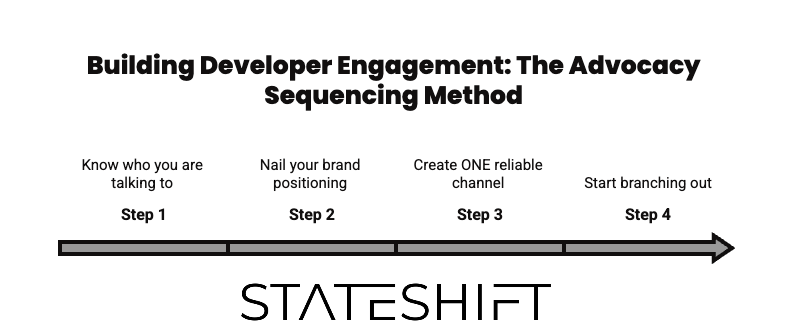
For the vast majority of companies who want to build awesome developer engagement, the sequencing is actually pretty simple. At Stateshift, we call this the Advocacy Sequencing method. Most teams jump straight to tactics. This method forces you to build the foundation first. It involves 4 steps.
Step 1: Know who you are talking to
Everything depends on knowing who your audience are.
Doing this is simple. Create a one-page Google doc and add in:
- Their job title
- What problems/challenges they have
- What desires and ambitions they have
- How you can help them with your product/project
Keep it simple – we don’t want a 15 page persona document that nobody will ever read. 1-2 pages max.
Step 2: Nail your brand positioning…most people don’t do this
Once your audience is clear, positioning comes next.
So, what on earth is brand positioning? It’s how your product shows up in the developer’s mental model.
To illustrate this, let me ask you a question. Which company do developers LOVE more…GitHub or Atlassian?
I think it is pretty obviously GitHub. Devs feel like GitHub “gets” them in a way Atlassian just doesn’t.
GitHub positioned themselves as the social hub for developers with shared interests and values. Once they defined that identity, they could clearly understand what to build first and what to add later.
The result? GitHub became the leading open-source community by attracting and creating advocates who aligned with its purpose: giving developers a place to build, collaborate, and earn recognition for their work.
Without positioning, content lacks value. Community lacks identity. All executions lack relevance to your developers.
We’ve seen this play out across 250+ companies at Stateshift. The teams that skip positioning and jump straight to community or content end up rebuilding six months later. The ones that nail positioning first build brand advocates who stick around.
Step 3: Create ONE reliable channel
Now before you start throwing spaghetti on the wall by creating blogs, videos, websites, concerts, and all the bells and whistles…start small first.
You want one, single, dependable way to reach your audience.
This should be simple, reliable, easy to make and manage, that genuinely helps developers solve real problems.
You’re not trying to reinvent the wheel here, you’re just trying to make something that genuinely connects with developers, and connects to their everyday work.
We started off doing this at Stateshift through email newsletters.
And yes…developers do read emails, just not the Black Friday spam junk most emails have.
Newsletters were simple, easy to make, but delivered tons of value, and let us test what developers engaged with, enabling us to build genuine relationships with them.
The point of having one reliable channel is to keep an open line with developers. That means things out, see what they like or don’t, and use that feedback to get better at connecting with them over time. You’re basically testing the ship before it actually sets sail.
Step 4: Start branching out
So by now you should understand who your audience is, what makes your brand unique, and how you can properly create real value from developers, great! That now serves as the foundation to properly expand to other channels.
A great example was from our work with a company that wanted to launch an ambassador program early.
By first publishing customer stories and running targeted product calls, they built credibility. So when their ambassador program finally launched, it gained traction immediately.
Once you’ve got your main way of communicating figured out, it becomes much easier to branch out into things like videos, events, or community, without it feeling scattered or forced.
You can create videos that build trust, communities that deepen relationships, and ambassador programs that scale real credibility.
All because you have a better understanding of what your developers need.
How to prioritize before you sequence
If you want to apply this without crashing into an iceberg, here’s a practical starting point.
Before sequencing work, you need to first prioritize your executions. Because when you understand what’s important, you start to understand where to start first.
This is where many teams can use the Eisenhower Matrix. It essentially outlines urgent vs not urgent. Important vs not important.
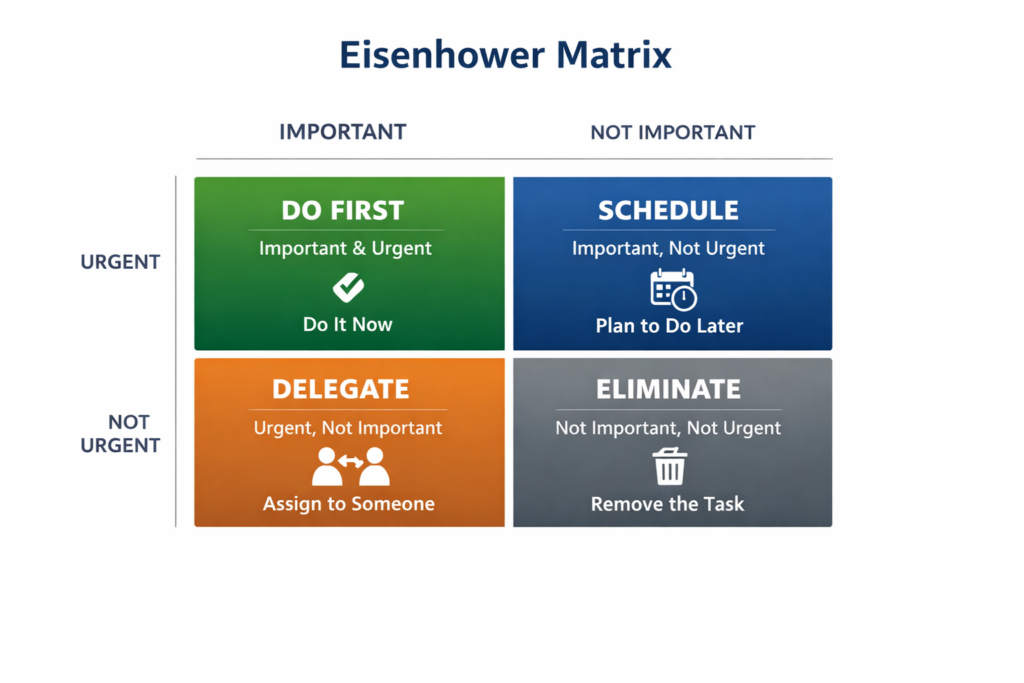
You want to list everything you want to do. Then place each item on the matrix honestly.
Usually, audience definition, positioning, and owned channels land as important and urgent. Mascots, swag, and side projects on the other hand rarely do.
Once you prioritize all your initiatives, you’ll understand much better how to sequence your ideas.
You want to list everything you want to do. Then place each item on the matrix honestly.
Usually, audience definition, positioning, and owned channels land as important and urgent. Mascots, swag, and side projects on the other hand rarely do. Once you prioritize all your initiatives, you’ll understand much better how to sequence your ideas.
The order matters more than the effort. Most developer programs don’t fail because teams aren’t working hard enough. They fail because the right work is happening at the wrong time. Get the sequence right, and everything else gets easier.
Not sure if your sequencing is off? At Stateshift, we work with developer tool companies to build the foundations that turn users into brand advocates. Book a blind spot review call with Jono to see where your sequence might be off.
Common questions about creating brand advocates
What does sequencing mean in developer ecosystems?
Sequencing means prioritizing and ordering your ecosystem work so foundational steps happen before scaling efforts. It ensures your content, community, and programs build on each other, instead of competing for attention.
Why does sequencing matter more than tactics when building brand advocates?
Isolated tactics don’t create brand advocates. Sequencing ensures you build trust first, then scale outreach. At Stateshift, we call this Advocacy Sequencing and use it with developer tool companies to build advocacy that lasts.
Can you fix sequencing after you’ve already launched initiatives?
Yes. Most teams do. Fixing sequencing usually means pausing or reworking initiatives so you can rebuild the foundations before scaling again.
What should come first when trying to turn developers into brand advocates?
Audience definition. If you don’t know who you’re building for, your positioning, content, and community efforts won’t align. Advocacy only happens when developers feel understood and served.
How do you know if your developer program is in the wrong order?
Common signs include low community engagement despite good content, advocacy programs that don’t gain traction, or developers signing up but never coming back. These usually point to a sequencing problem, not a quality problem.