

If you’re comparing community platforms right now, Circle is probably on your list.
It’s often described as an all-in-one solution for structured, revenue-driven communities. Courses, spaces, automation, live events — everything under one roof.
We’ve already reviewed Mighty Networks, which tends to attract creator-led communities focused on monetization and programs. Circle plays in the same category, but it’s built with a different bias. It prioritizes segmentation and operational control over simplicity.
And that difference matters.
On the surface, most platforms in this space look similar. The real differences show up once you’re managing scale, permissions, automation, and pricing.
So instead of asking “Is Circle good?” the better question is: when does Circle actually make sense?
That’s what we’re going to unpack in this Circle.so review.
What Circle Is Actually Good At
Circle’s biggest strength is structure.
More specifically, it’s very good at breaking large communities into smaller, focused spaces without fragmenting the overall experience.
In a growing community, a single feed eventually stops working. Conversations overlap. The same voices dominate. New members hesitate because they don’t know where to start.
Circle’s answer to this is its Spaces and Space Groups model. Instead of one continuous stream, you create defined environments inside the same platform — different audiences, different access levels, different purposes.
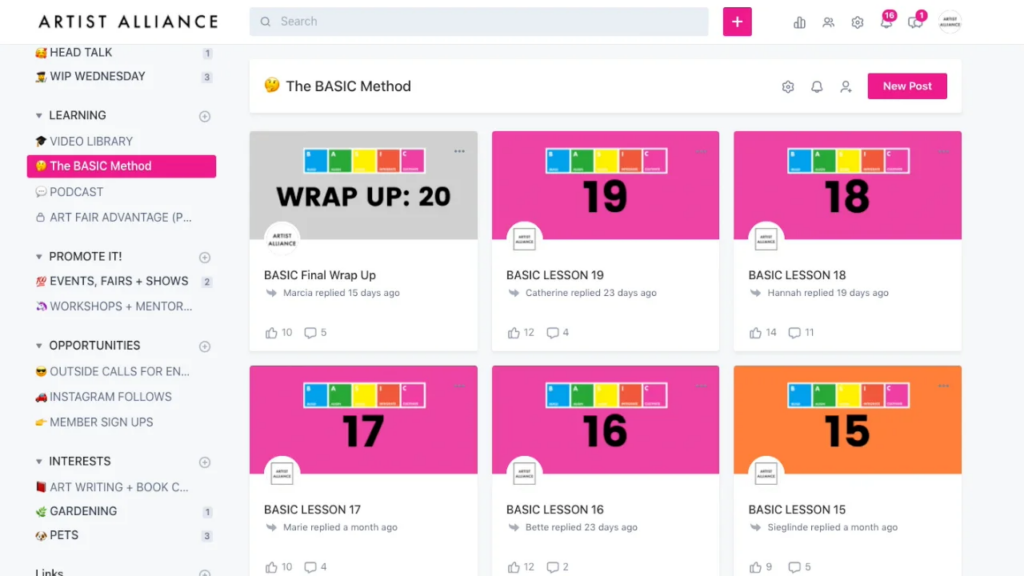
That structure is what allows large communities to function.
We’ve seen communities with 10,000+ members stay active not because they produced endless content, but because they segmented effectively. Communities like Tiago Forte’s Building a Second Brain operate at significant scale and rely heavily on structured spaces to prevent everything from collapsing into one noisy feed.
That’s the real strength here.
Circle doesn’t magically create engagement. It makes growth manageable.
How Circle Works in Practice
Circle talks a lot about connecting courses and community. And in fairness, that part isn’t just marketing language. It works.
Courses, lessons, videos, and discussions all live in the same place. You’re not sending members to one tool for content and another for conversation. Everything stays connected.

Now, this isn’t unique. Mighty Networks does something similar. So do other all-in-one platforms. What Circle does well is tie progression directly to access.
Finish a lesson? You can unlock a new Space. Change permissions. Trigger a message. Move someone into a cohort discussion.
Circle calls this “community-powered learning.” In practical terms, it means learning milestones can change how someone experiences the community.
That matters if you’re running structured programs or paid tiers. It matters less if you’re running a straightforward discussion group.
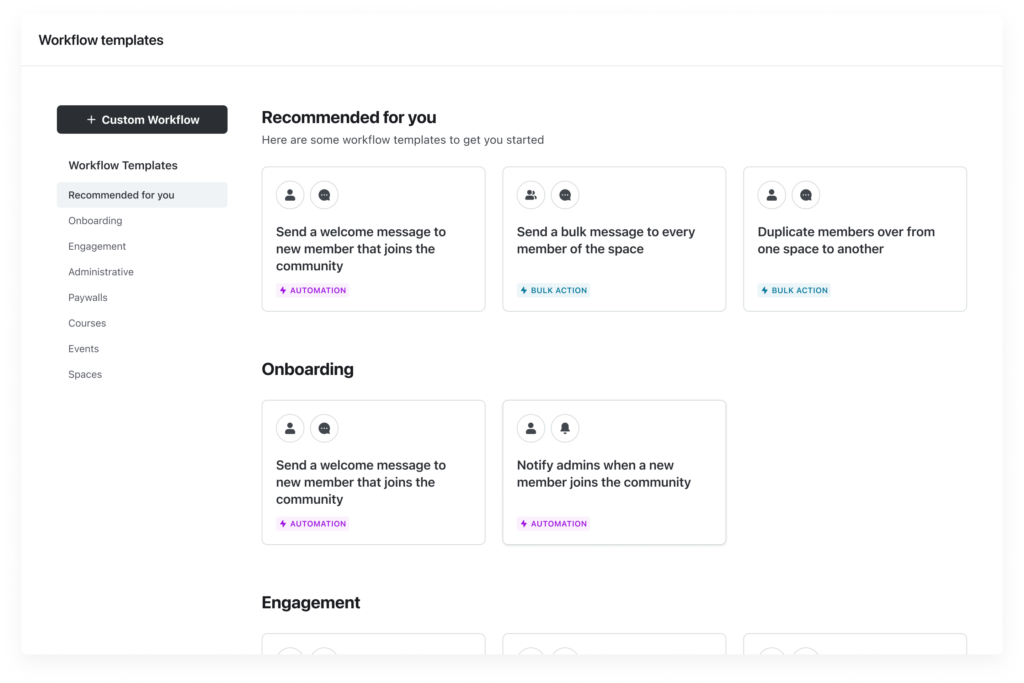
Automation is where Circle starts to feel more intentional. On higher plans, you get API access and Zapier integrations, which means you can build logic into the experience instead of manually moving people around every week.
But here’s the nuance: most serious platforms now offer automation in some form. The question isn’t whether Circle has it. It’s whether your model is complex enough to need it.

Live video is built in too. It works. It keeps events and conversation under one roof. If you’re running high-production webinars, you’ll probably still use Zoom. Circle’s advantage is centralization, not studio-level production.
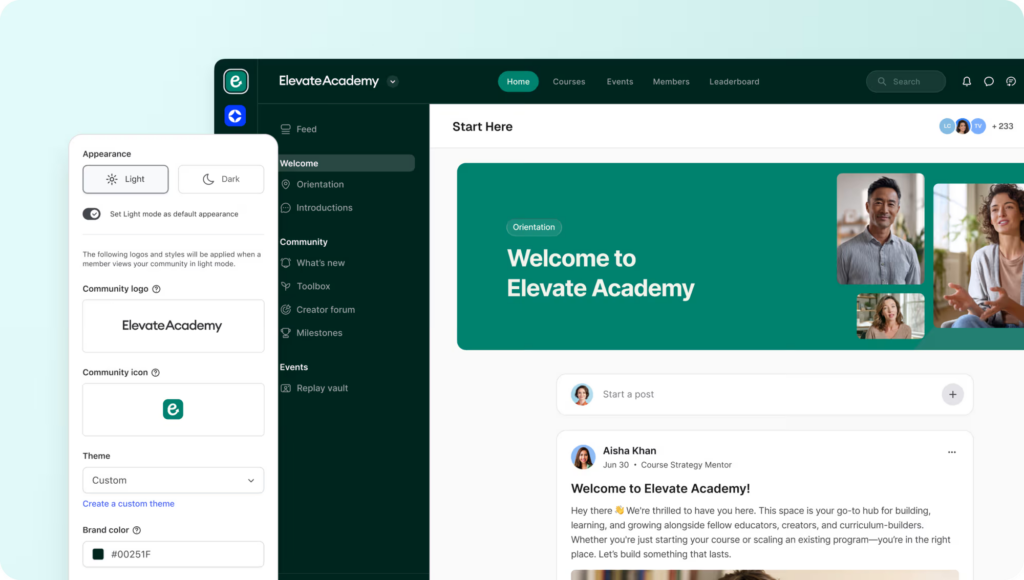
Customization and branding is solid. Custom domains, themes, layout control. At this level, that’s expected. The real value is having those controls integrated into the same system as everything else.
None of this is flashy.
Circle’s strength is operational clarity. If you’re running a multi-tier, revenue-driven community, that clarity starts to matter.
If your community is simpler, Circle may feel heavier than necessary.
Where Circle Starts to Show Its Limits
Circle’s strength is structure, but you also have to remember that its structure comes with a few tradeoffs.
Courses fit neatly into the community, which is great for keeping everything in one place. But Circle isn’t a traditional course platform. If your program relies on quizzes, graded assignments, or certifications, you’ll need extra tools. For cohort-based programs, that usually isn’t a dealbreaker. For credential-driven programs, it matters a lot more.
Automation is another area where the fine print matters. Circle supports workflows and integrations, but the features that really make it powerful often live on the higher-tier plans. That’s why we don’t just look at the feature list, we look at what plan you actually need to make it work. And that’s usually where cost calculations start to shift.
Live events are built in, which keeps everything centralized. Perfect for most communities. But if production quality is part of your strategy, you’ll probably still lean on a dedicated webinar tool.
At the end of the day, how limiting these things feel depends entirely on how your community actually runs.
How We Evaluate Circle at Stateshift
We don’t run Circle ourselves.
But we’ve reviewed community platforms with clients who were choosing between structured community platforms, and we’ve worked with teams that have used Circle.so in the past.
When Circle comes up in a client conversation, it’s usually for one reason: structure.
Segmentation. Permissions. Cohorts. Paid tiers. Multiple audiences sharing the same ecosystem.
That’s when the platform starts to matter more.
When we evaluate Circle, we’re not asking whether it’s feature-rich. Most platforms in this category are.
We’re asking two things:
- Does the community model require this level of structure?
- And does the team have the operational capacity to manage it well?
If the answer to both is yes, Circle can make sense.
If the model is simpler, or if the team is still figuring out their strategy, Circle can feel heavier than necessary.
That’s typically the dividing line.
For Circle’s pricing, it’s Professional plan starts at $89 per month.
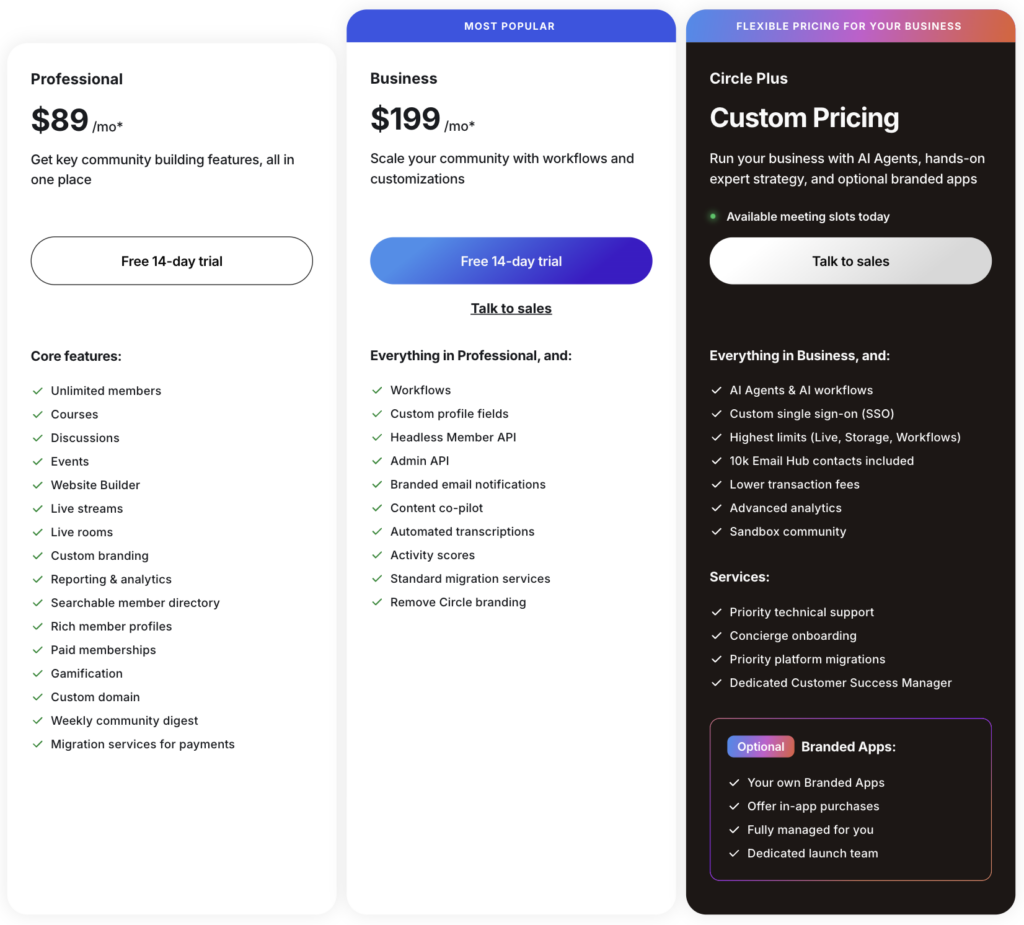
That’s not extreme. But base pricing rarely tells the full story.
Circle also charges transaction fees on paid communities. As of this writing, that’s 2% on top of standard Stripe processing fees. That percentage looks small, until revenue scales.
At $10,000 per month in community revenue, that’s $200 in platform fees before payment processing. Over a year, that’s $2,400.
Now add in the fact that the automation and API access most structured communities need often live on higher-tier plans.
So the real question isn’t “Can we afford $89 per month?”
It’s:
What does this cost once the community is working the way we want it to?
If community is core infrastructure and already generating meaningful revenue, that cost is predictable and manageable.
If you’re still validating the model, those fixed and variable fees can outpace the value quickly.
Circle isn’t expensive in isolation.
It’s expensive relative to uncertainty.
And that’s where most teams get tripped up.
Who Circle Is — and Isn’t — For
Circle makes the most sense when your community is part of how you make money, not just a side channel.
If you’re running paid programs, structured cohorts, or multiple access tiers, the segmentation and automation start to earn their keep. That’s where the platform feels intentional instead of excessive.
It also works best when someone actually owns it. Circle gives you control. But that control takes effort. Spaces, permissions, workflows — they need someone thinking about them.
Where Circle can feel like too much is earlier on.
If you’re still testing your idea, building early traction, or just trying to get people talking, the structure can feel like extra weight. You end up configuring systems before you’ve proven you need them.
And if your model depends on traditional learning features like quizzes or formal assessments, you’ll likely need additional tools anyway.
At a certain stage, Circle feels clean and powerful.
Before that stage, you may end up managing the tool more than the community.
So… Is Circle Worth It?
Circle is a strong platform for structured, revenue-driven communities.
If you’re running paid programs, managing tiers, and need segmentation that actually holds up at scale, it delivers what it promises. The structure is thoughtful. The automation is capable. The ecosystem stays contained.
But it assumes you already know what you’re building.
If you’re still figuring out your model, testing engagement, or running something simple, Circle can feel heavier than necessary. The features are there. The question is whether you need them yet.
Circle works best when the community is part of the business engine — not when you’re hoping the platform will create the engine for you.
And that’s usually the real decision.
If you’re still curious about Circle, you can check out Jono’s video where he goes through it in detail:
FAQ – Circle.So Review
What’s the better community platform: Circle or Mighty Networks?
Circle and Mighty Networks serve different needs. Circle is the better pick if you want to organize your established community into groups, tiers, or structured programs. Mighty Networks is more of an all-in-one platform with a built-in social experience and its affordable mobile apps.
How is Circle different from other community platforms?
Circle focuses heavily on structure and segmentation. Instead of one large feed, communities are organized into Spaces with different audiences and access levels. This makes it easier to manage cohorts, tiers, or programs within the same ecosystem.
Can Circle replace a traditional learning platform?
Not entirely. As highlighted in our Circle.so review, the platform supports courses, lessons, and discussions in one place, which works well for cohort-based or community-driven learning. But it lacks built-in quizzes, grading, or certifications typical of a traditional learning platforms. For many programs that prioritize discussion and interaction, this isn’t a problem.
Is Circle worth the cost?
Circle starts around $89/month, but pricing increases as you add automation, higher tiers, or paid memberships. There’s also a transaction fee on paid communities. In our experience at Stateshift, Circle tends to be worth it once a community is already monetized—not when you’re still validating the idea.