So you finally built your community. You created thoughtful course material, you’re hosting engaging live sessions, and members are joining in.
There’s just one problem. Actually… It’s more like five.
Your discussions are on Discord. Your courses live in Skool. Payments run through Stripe. Events happen on Zoom. You hook it all together with Zapier so it works.
And technically… it does.
But it doesn’t really feel like one place. It feels like a bunch of tools duct-taped together.
From your members’ side, it’s confusing. They’re trying to remember where a discussion happened. Clicking through links to find the next event. Guessing which login they used for which platform.
Nothing is broken. But nothing feels cohesive either.
So even though there’s activity happening everywhere, it doesn’t translate into sustained engagement.
And this is exactly what Mighty Networks wants to fix.
By becoming the Swiss Army Knife of community platforms, Mighty wants to be the single platform that contains all your essential community engagement tools and experiences.
But the real question is…does this actually make things simpler? Or is it just a bundle of chaos set into one place?
In this Mighty Networks review, we’ll take an honest look at the platform: its strengths, weaknesses, and the most effective ways to use it, based on our experience working with other clients.
What Mighty Networks is actually good at
The real strength of Mighty Networks is one thing:
Organization in one single space.
Why? Imagine, instead of having to stitch together five different platforms with Zapier, you could bring together community discussions, courses, events, livestreaming, chat, and monetization into a single platform.
And these features aren’t just bolted on, but are all connected experiences for your members.
The key feature behind this is what Mighty calls “Spaces.”
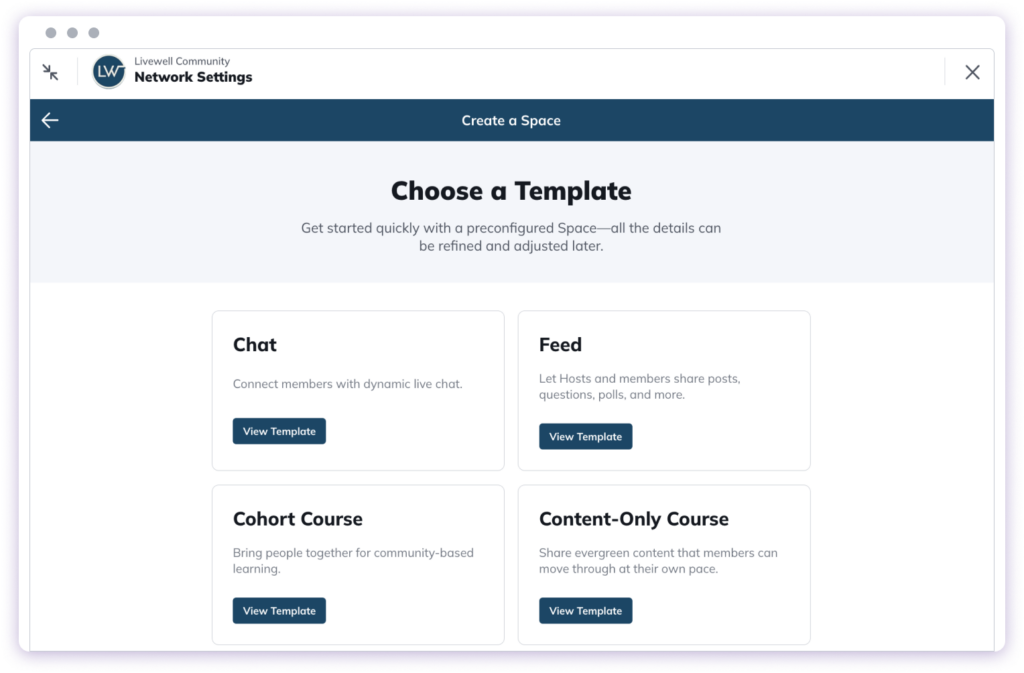
You can think of them as containers, each being able to have different features and experiences meant to engage your community, all on the same platform.
These spaces have a variety of uses:
Community spaces solve a very simple but very painful problem: scattered conversations.
Instead of discussions living in Slack, email threads, random social posts, and DMs… everything lives in one predictable place.
When your members know where things happen, they build the habit of coming back. No friction. No guessing. Just one home base.
Courses work the exact same way here.
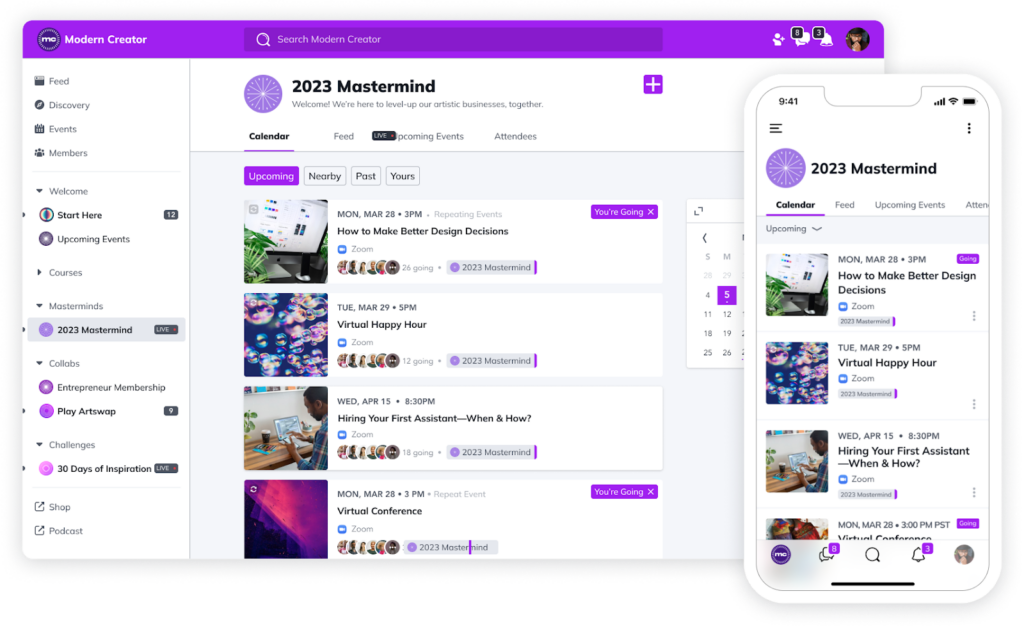
Most communities host their learning somewhere else, a separate course platform, a different login, another tab. Here’s what often happens instead.…the moment members have to leave the platform to consume content, participation drops.
Your members end up watching alone, not discussing anything with other members, and in the end no one connects with each other.
But when courses live inside the same space as discussion, something changes.
Members can immediately talk about what they’re learning. They can ask questions, share insights, and react in real time.
That shift matters. At Stateshift, we’ve seen that communities retain members when learning is interactive, not passive. When people consume content alone, they drift. When they discuss it, they build relationships. And relationships are what keep communities alive.
In developer communities, that interaction often leads directly to deeper product usage and long-term adoption.
But…communities are more than just text threads. If all your members can do is type, the experience feels flat, and pretty much like a regular support channel.
Real communities create shared moments, and that’s where events and livestreams add a whole new layer.
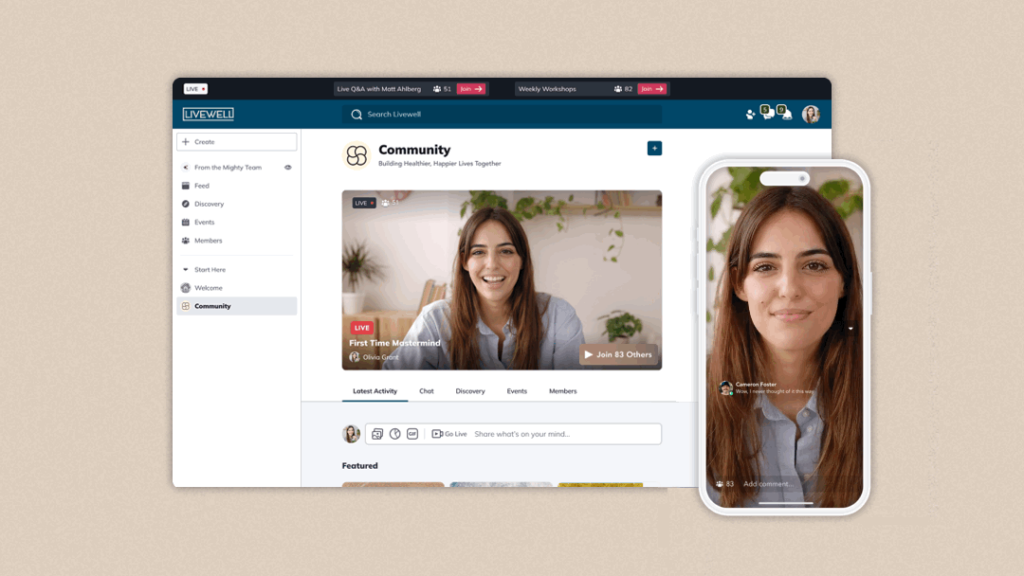
Now, If you’re just sending Google Calendar invites through email…those get buried in their inbox.
But when members see upcoming events in the same platform they already visit, participation becomes part of their routine.
And when livestreams don’t require jumping to another tool, they feel like part of the community, not some separate broadcast happening somewhere else.
Then there are polls and quick posts.
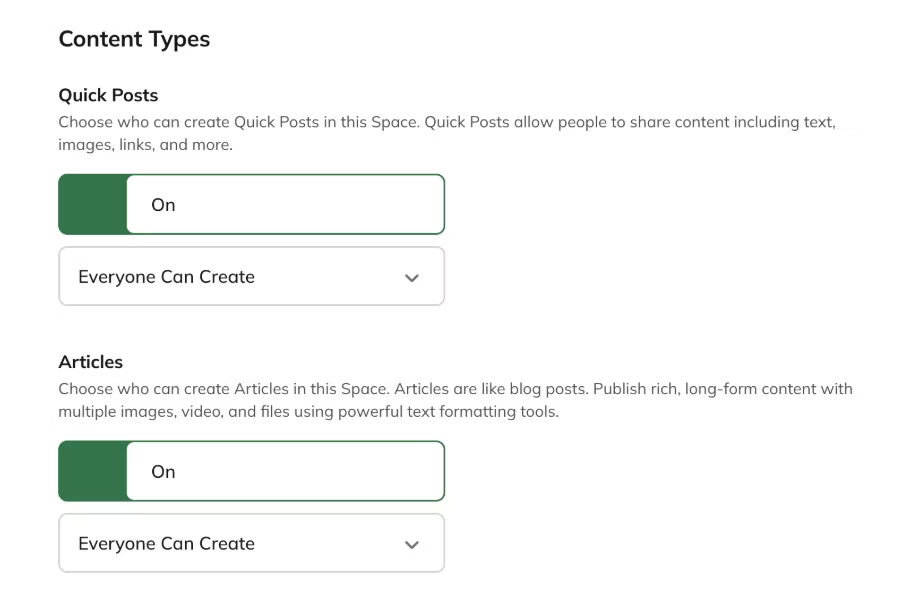
Not everyone wants to write a long, thoughtful message.
But many members are willing to vote in a poll or drop a short reply. Those small actions matter because they lower the barrier to participation. And once someone participates once, they’re far more likely to do it again. In tech communities, lowering that first barrier is often the difference between a passive member and an active contributor.
Think of the platform like a town square where all your residents can chat, play sports, watch movies, have a cup of coffee, all in one place rather than having to travel miles to do each activity separately.
That kind of structure is where Mighty really shines.
Does it make community members come back?
Structure is helpful. But structure alone doesn’t make anyone return.
The real test of a community platform is simple: do people come back without being chased?
This is where Mighty tries to stand out. Beyond consolidating tools, the platform is designed to make participation feel easier and more natural.
For example, connecting with other members is one of the biggest friction points in any community. Most people hesitate before jumping into a conversation.
Mighty’s People Explorer surfaces members with shared interests, location, or activity, which lowers the barrier to starting that first interaction.
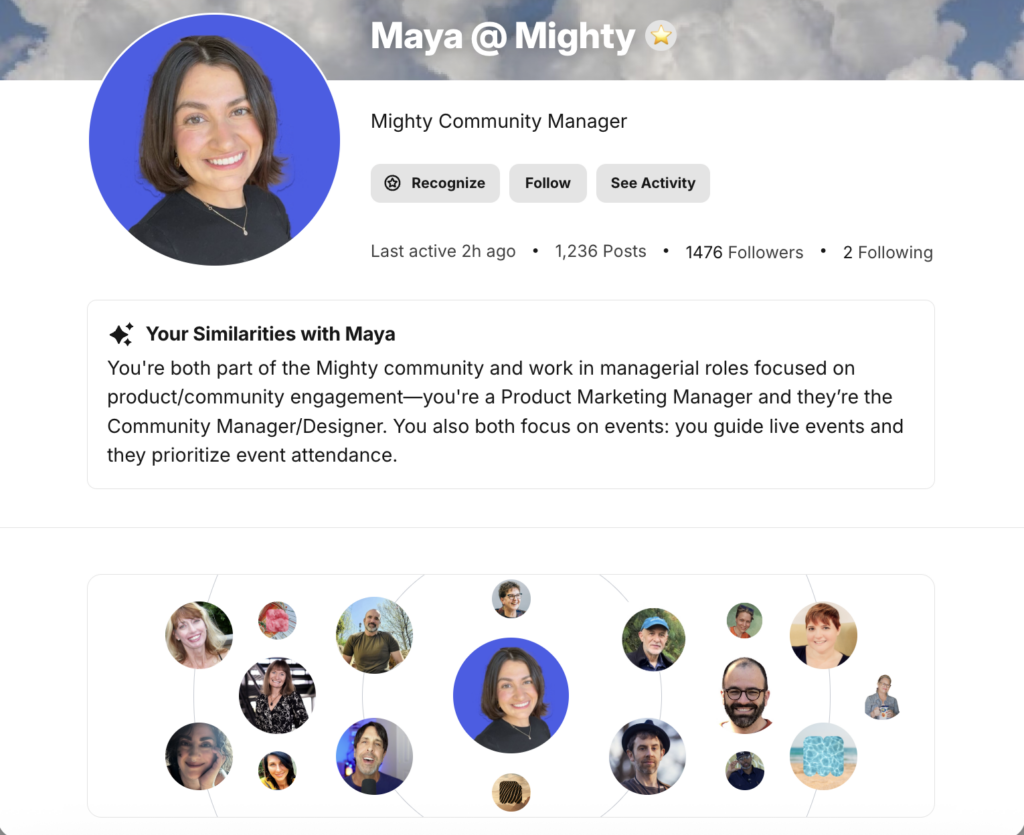
It’s not revolutionary on its own, but it reduces that “who do I even talk to?” moment.
The same idea shows up in how Mighty handles conversations.
Built-in icebreaker prompts and question generators make it easier to start discussions without staring at a blank space. Simple prompts like “What are you currently building?” or “What’s one tool you rely on every day?” give members a low-risk way to participate.
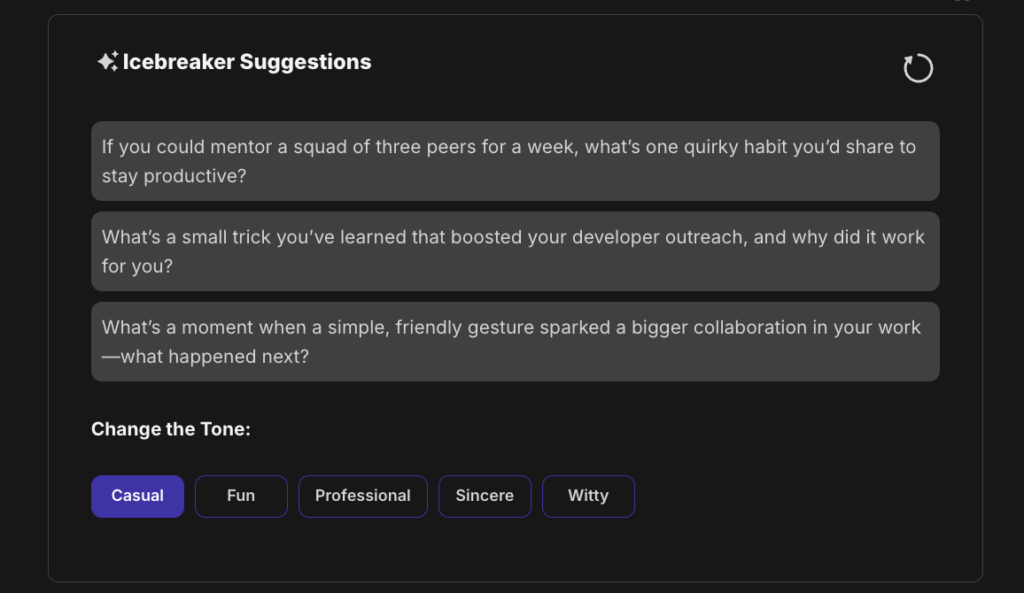
When participation feels easy, more people join in.
There’s also a lightweight streak system and activity tracking. It’s subtle, but visible consistency cues encourage members to return. It’s not aggressive gamification. It’s reinforcement.
Now, does this actually change engagement?
Many large communities report monthly active user rates around 20 percent. Mighty has shared higher averages in certain segments. That said, engagement isn’t created by features alone. It comes from structure, clarity, and intentional design.
What Mighty does well is reduce friction. It makes discovery, participation, and consistency easier. And that often makes the difference between a community that feels stagnant and one that builds momentum over time.
In tech communities, participation doesn’t increase because you ask people to engage more. It increases when interaction feels natural and obvious. At Stateshift, we’ve seen that participation grows when learning, discussion, and events happen in the same space and members always know where to go next. Platform structure doesn’t create engagement on its own, but it either supports it or quietly undermines it.
How our clients use Mighty Networks
Mighty Networks is one of the community tools we recommend to certain clients.
In our experience, Mighty works best for communities that are less tech-heavy and more learning-driven.
Think online mentorship groups, coaching programs, or education-focused memberships where people want courses, live sessions, discussions, and resources all in one place.
It’s especially strong for communities that love the idea of having everything under a branded experience, even their own app.
A good example is Results Mentoring, a client we worked with in Australia.
They were launching a property mentoring community from scratch. The expertise and audience were already in place. What was missing was structure.
We worked with them to design and launch their Mighty-based community.
Within six months, membership grew by more than 200%, with strong early participation from members.
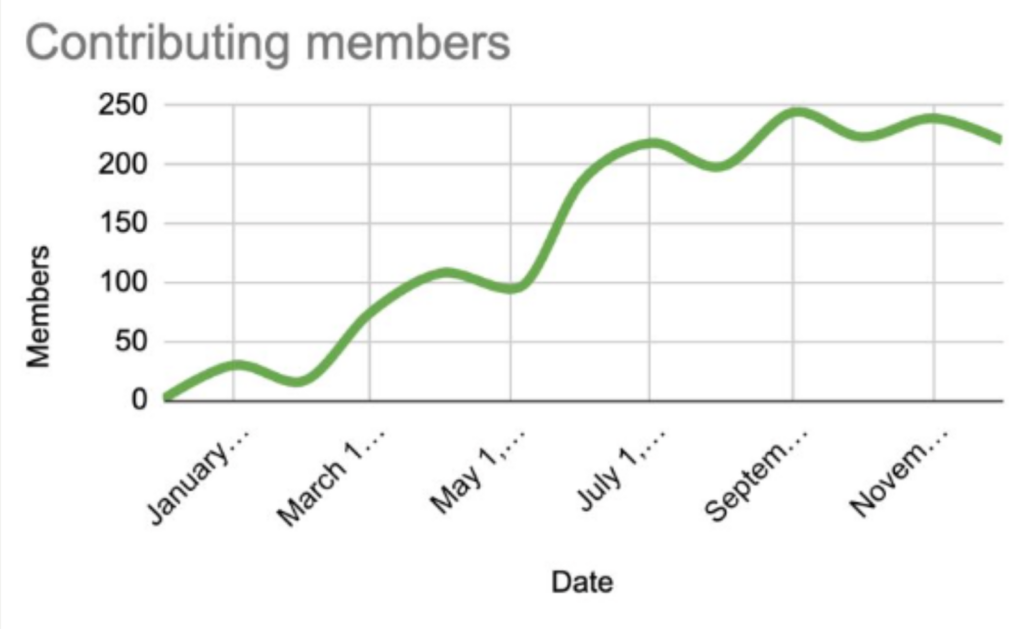
And while that number alone sounds impressive, the more important measure wasn’t just member growth.
It was how engaged their members were, and thanks to the tools and features Mighty Networks provides, their community came to life.
The team found the platform intuitive to set up. They were able to create clearly defined Spaces for different types of members. And events and payments lived inside the same platform as conversations.
All this created a community experience where their members actually enjoyed using it.
They found it easy to navigate. They liked having everything in one place. The app experience made it simple to check in regularly.
Now, it’s important to say this clearly:
Mighty didn’t magically create that outcome.
We still had to do the strategic work.
We clarified their positioning and messaging.
We launched an early adopter initiative to gather feedback.
We tested discussion formats and refined content based on engagement.
So, while the platform supported a community building strategy, you shouldn’t expect it to build one for you.
That’s really the key.
“If you build it, they will come” doesn’t apply to the community. And no platform, including Mighty Networks, can fix unclear strategies.
You still need to understand your audience, design intentional touchpoints, and iterate based on what you’re seeing.
Does customization and mobile actually work?
Founders often OBSESS about branding, and rightfully so. Afterall, your community needs to feel like yours, not a cookie-cutter template you found online.
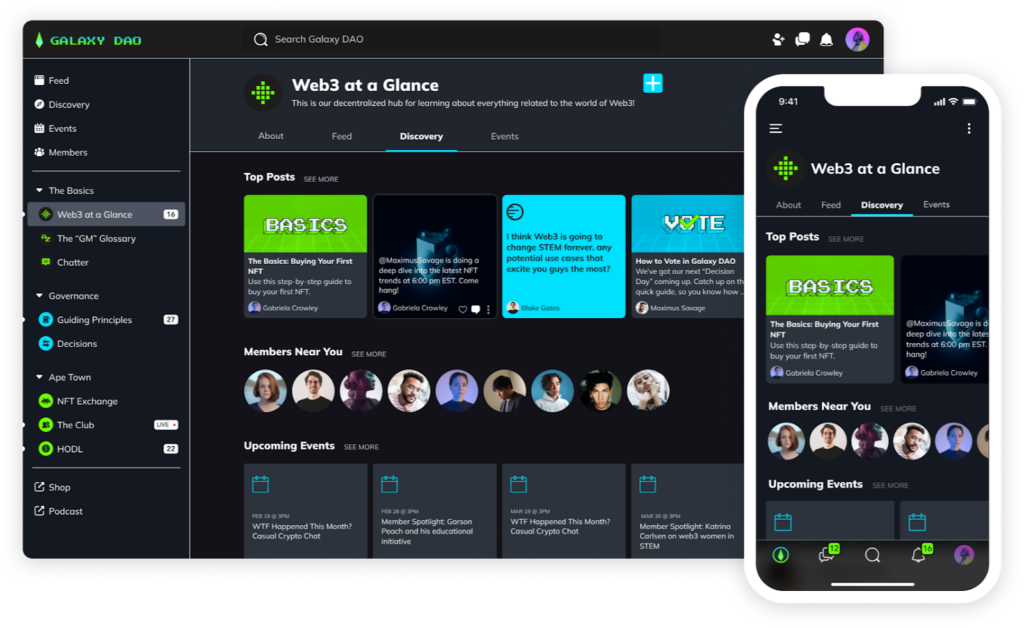
And thankfully, Mighty Networks offers solid customization.
You can use a custom domain, brand the login experience, control colors, add your logo, and choose fonts. For many teams, that’s enough to make the space feel cohesive and intentional.
But it’s important to set expectations. This isn’t full front-end freedom. You’re still operating inside Mighty’s design system. You can’t rebuild the interface from scratch or deeply customize layouts the way you could with a fully custom build.
For most education-driven or membership communities, that tradeoff is reasonable. The framework keeps things clean and consistent. For design-heavy brands that want pixel-level control, it may feel limiting.
Where things change is on Mighty Pro. At that level, you can launch branded iOS and Android apps under your own name. That includes push notifications and a native mobile experience.
This can meaningfully increase engagement. But it also comes at a higher price point, so it only makes sense if mobile engagement is central to your strategy.
Mobile matters. Especially for communities that rely on frequent, lightweight interaction. But mobile alone won’t fix a weak engagement model.
Customization supports your strategy; it doesn’t replace it.
Can you earn money through Mighty Networks?
If revenue is part of your plan, this is usually where the conversation shifts. Mighty includes subscriptions, one-time purchases, bundles, payment plans, and free trials directly inside the platform, so payments, access, and discussion can all live together.
Mighty also publishes average pricing data across its network.
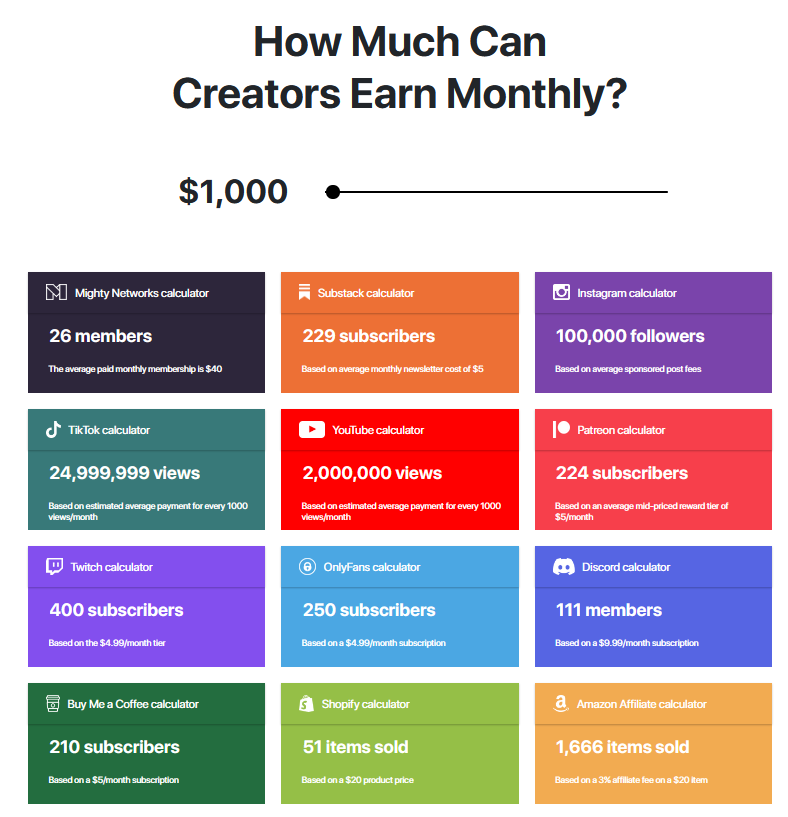
At first glance, those numbers look compelling. But they’re descriptive, not predictive. They show what some creators are doing. They don’t guarantee what you will do.
Revenue doesn’t come from the billing tool. It comes from positioning, clarity, and whether the experience solves a specific enough problem that people are willing to pay for it.
What Mighty Networks doesn’t replace
Let’s be realistic…can Mighty Networks replace your ENTIRE tech stack?
Well, not really. Because it depends on what you need and the depth of it.
Limited analytics
Mighty Networks’ analytics is still pretty basic on their base community plan. When you look at its dashboard it does allow you to track the basics (member count, active members, total contributions).
But, if you’re a data-focused team that needs detailed funnel analysis and behavior tracking for your users, you’ll likely want to look into their course plan.
How much customization do you want?
This matters for many teams because if you want to measure how community engagement actively drives product adoption, you’ll likely need to export, segment, and monitor your users data and analyze it elsewhere.
Mighty Networks also has email functionality, including automated welcome emails and basic broadcasts. But if you’re a team who needs more sophisticated campaigns, other platforms like Kit, Hubspot, or Zapier integrations to connect Mighty Networks will be needed.
For most teams you’ll also still want a dedicated website. Mighty allows multiple landing pages, but full website functionality like documentation, product pages, blog, SEO optimization, really works better on dedicated platforms.
But to be honest, for most teams who value simplicity and seamlessness in their communities, these limitations are reasonable trade-offs for the integrated community approach Mighty Networks provides.
Who should and should not use Mighty Networks
Mighty Networks is a good fit if:
- You want courses, community, events, and payments in one place.
- You’re building a paid membership or hybrid learning community.
- Mobile experience and integrated engagement features matter.
- You want to simplify your tech stack.
It might not be the right fit if:
- You only need a lightweight forum or heavy front-end customization.
- You want advanced email marketing built in.
- You can build a custom solution for less cost.
In general, Mighty Networks works best when you’re focused on community-led growth through simple integration as a part of your product strategy.
So if you’re treating community building as a side gig, or “just because”, it’s likely not going to benefit you in the long run.
Should you use Mighty Networks?
If your biggest challenge is tool sprawl, Mighty Networks can help.
When discussions live in one place, courses in another, events somewhere else, and you’re stitching it all together with integrations, members feel that friction. Consolidation alone can make the experience cleaner and easier to navigate.
Mighty Networks works well for learning-driven communities. Paid memberships. Mentorship programs. Environments where content and conversation need to live side by side.
But it won’t fix strategy.
If members don’t know why they’re there, who they should talk to, or what they should do next, no platform solves that. Structure supports engagement. It doesn’t create it.
You may still need separate tools for advanced analytics, marketing automation, documentation, or deeper customization. That’s normal.
So the better question isn’t just whether Mighty is good.
It’s whether this structure supports the way you want your community to behave.
If you’re a DevRel or product team deciding where your developer community should live, the platform matters. But how you design the experience inside it matters more.
We’ve helped tech companies think through those decisions. Not just which tool to choose, but how to structure onboarding, participation, and touchpoints so the community actually supports product adoption.
If you want to see Mighty Networks in action, Jono walks through it in more detail in the video below.
And if you’re weighing options for your own developer community, that’s the kind of work we focus on at Stateshift.
Common questions about Mighty Networks
Is Mighty Networks actually an all-in-one platform?
Mighty Networks brings discussions, courses, events, and payments into one system. For many communities, that consolidation reduces tool sprawl. That said, most teams will still use separate tools for advanced analytics, marketing automation, or documentation.
Does Mighty Networks improve community engagement?
Mighty Networks can make engagement easier by keeping interaction and learning in the same place. When members don’t have to switch between platforms, participation becomes more natural. But engagement ultimately depends on community design and leadership, not just platform features.
Is Mighty Networks good for paid membership communities?
Yes, especially for education-driven or mentorship-style communities. Built-in monetization, structured Spaces, and mobile access make it well-suited for subscription models. It may be less ideal for highly technical communities that require deep customization.
How do you increase user participation in tech communities?
Increasing user participation in tech communities starts with reducing friction and designing clear interaction paths. At Stateshift, we’ve found that participation grows when learning and discussion happen in the same space, members know exactly where to engage next, and small actions like polls or quick replies are encouraged. Platforms like Mighty Networks can support this by consolidating tools and lowering barriers. But structure supports participation. Strategy sustains it.