

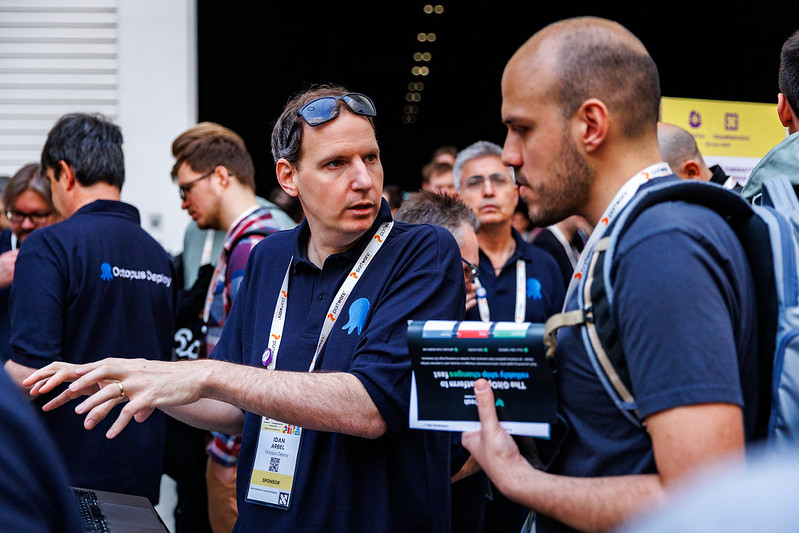
Most companies show up to KubeCon with one goal: talk to as many people as possible. Get the badge scans. Hit the lead target. Justify the spend.
That’s the wrong goal. And it’s why so many teams come home exhausted, hand their sales team a spreadsheet of 800 contacts, and watch most of those conversations quietly die.
If you’re figuring out how to prepare for KubeCon, the most important thing to know upfront is this: it’s not about volume.
KubeCon + CloudNativeCon Europe 2026 runs March 23-26 in Amsterdam. It’s one of the largest open source events in the world, and the cloud native crowd that fills those halls has a finely tuned radar for anyone who shows up to sell rather than to contribute. If your team isn’t prepared, you’ll spend four days talking to people who are already mentally walking away.
Here’s what actually works.
Stop trying to talk to everyone
Recent KubeCons have drawn somewhere between 10,000 and 12,000 people. You are never going to reach most of them. The sooner you accept that, the better your strategy gets.
I know this because we’ve watched company after company make the same mistake. They arrive buzzing with energy, determined to maximise every minute, and by day two they’re exhausted, demoralised, and not entirely sure what they achieved. They talked to a lot of people. They can’t tell you who.
The companies that actually generate pipeline from KubeCon don’t do it by casting the widest net. They do it by being very clear about who they’re there for, and then having genuinely good conversations with those people.
For us at Stateshift, a qualified prospect is a venture-backed tech company where developer engagement is a stated priority, they have or are building a dedicated team for it, and they want systematic approaches rather than one-off tactics. That’s it. Everyone else gets a friendly hello and we move on.
What does “right” look like for your company? Figure that out before you get on the plane. Not on the show floor.
How to prepare for KubeCon before you land in Amsterdam
The biggest mistake teams make isn’t what they do at KubeCon. It’s what they don’t do in the two weeks before.
Lock in meetings now. When thousands of people land at the same venue, everyone has the same idea: “I’ll book coffee once I’m there.” What actually happens is that calendars fill up within hours of arrival. The people you wanted to meet are already committed.
Get ahead of this. Look at who’s speaking, who’s sponsoring, who you’ve been meaning to connect with. The attendee list and LinkedIn will tell you a lot about who’s going. Reach out with something short and genuine: “Really respect what you’re building. If you’re going to be in Amsterdam, I’d love to grab 10 minutes while we’re both there.” No pressure. Clear ask. We’ve consistently seen this kind of outreach generate the best meetings of the whole event.
Aim for 10-15 confirmed meetings before you land. That’s your anchor. Everything else is a bonus.
Brief your team on what a qualified lead actually looks like. This sounds obvious. It almost never happens. We’ve worked with companies that sent five people to staff a booth and none of them agreed on what they were looking for. By the end of day one, they’re scanning badges on anyone who makes eye contact. Brilliant. Except it isn’t.
Before you travel, sit down as a team. Walk through exactly who you’re there for: company stage, role, the problems they’re dealing with. Run some example scenarios. Role-play the conversation if that’s not too awkward. If someone at your booth can’t clearly describe who a good prospect is, they’ll have identical conversations with a student and a VP of Platform Engineering. That’s a waste of everybody’s time.
Working the booth without being THAT person
You know that person. The one who launches into a timeshare presentation the moment you drift within three feet of their booth.
Don’t be that person.
I’ve walked past booths at KubeCon where someone immediately launched into a full product pitch at a stranger they’d never met. I’ve also walked past booths where someone just said “Hey, how’s your day going? Where did you come in from?” Same event, totally different experience. Guess which one I remembered.
The cloud native community rejects over-marketing briskly and without apology. Show up with a sales script and they will walk away. Show up as a normal human and you’ve got a shot.
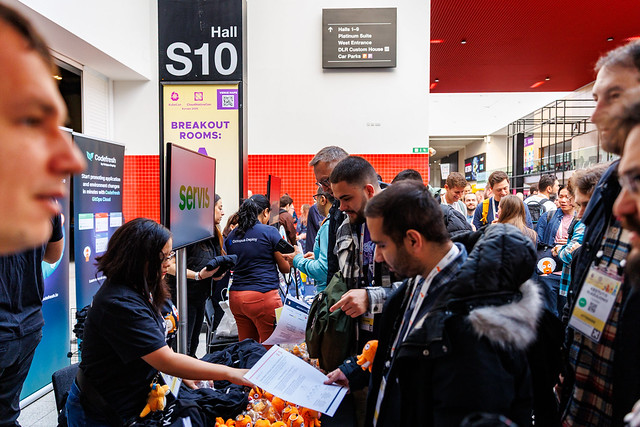
Here’s the sequence that actually works:
Open casually. Ask about them, not your product. “How’s the conference been for you?” “Is this your first KubeCon?” Active listening here isn’t a sales technique, it’s just how you figure out if this is a conversation worth continuing.
Ask what they’re wrestling with. “Tell me a bit about what you’re working on” or “what’s been the hardest infrastructure problem you’ve been dealing with lately?” Let them talk. You’ll quickly hear whether this is someone you can actually help.
Reflect back what you heard. “So it sounds like the main challenge is X, and what you’d really want is Y.” If you’ve got it right, they’ll say yes and you’ve earned the right to be useful. If you got it wrong, they’ll correct you. Either way, you’ve learned something.
Make a specific, low-pressure ask. Not “want to see a demo?” right away. More like: “We’ve helped a few teams with exactly that — would it be worth grabbing 20 minutes after the keynote to walk through how?” If they’re interested, great. If not, you’ve still had a real conversation, which is already more than most booths achieve.
Badge scans are fine for record-keeping. But a badge scan with no real conversation is nearly worthless. One genuinely qualified conversation with a follow-up booked is worth more than 200 scans.
Where to actually spend your time
First time at KubeCon? The schedule is going to feel like stepping into the dorkiest Disneyland you’ve ever been to. There’s a solutions showcase, keynotes, breakout sessions, co-located events, social events, and a hallway that never seems to empty. You cannot do all of it.
Here’s how to think about it.
The hallway track is where the real event happens. This is the informal space between sessions where people wander and talk. It’s unpredictable and brilliant for it. Don’t fill your schedule so tightly with sessions that you lose this time. The sessions will be recorded. The hallway conversations won’t.
Social events punch above their weight. There’s something about eating and drinking with people that booth conversations can’t replicate. People talk about their families, their frustrations, what they’re genuinely excited about. The trust built over dinner is different from the trust built in a 10-minute booth exchange. If you can get to the right social events, that’s often where the best post-event relationships actually start.
The co-located events on the Monday — ArgoCon, Observability Day, CiliumCon, and others — are worth looking at if your product lives in a specific corner of the cloud native stack. The audiences there tend to be more focused and more technical than the general KubeCon crowd, which makes qualification easier.
Thursday afternoon is not the time to disappear. We know. Your feet are killing you. You’ve been on them for three days. But the last stretch of the Solutions Showcase is often where the most relaxed, most candid conversations happen. Everyone’s tired, the pressure of the week is winding down, and people actually talk. Stay present.
Tracking what actually matters
You’re spending real money to send a team to Amsterdam for four days. You should know whether it was worth it.
The tricky thing with developer events is that impact is often delayed. A conversation at KubeCon might turn into a deal six months from now. A developer you meet in the hallway might recommend your product to three people over the following year. That’s real ROI. It just doesn’t show up in a clean post-event report.
Here’s what we recommend tracking:
Qualified discussions and booked follow-ups. At the end of each day, gather your team for 15 minutes. How many genuinely qualified conversations did you have? How many next steps got booked? The numbers won’t be precise. They don’t need to be. They give you a directional read on how the week is going, and a baseline for future events.
Booth traffic. A rough daily count of how many people came through your space. Some teams use those little handheld clickers. Others just estimate. The point is trend, not precision. If traffic drops on day two, ask why. If it spikes after a keynote that touched on a problem you solve, note it.
People influenced. If someone on your team gave a talk, how many people were in the room? Did you run a side event? These are real data points that help build a fuller picture of your total reach at the event.
Call-to-action consumption. If you’re running a specific offer — a post-event webinar, an invitation-only session the following week, a trial — track how many people actually take it up. That’s a direct signal of whether your message landed.
This is how you stop guessing. Which events to double down on. Which parts of your booth presentation to quietly kill. Whether the co-located sponsorship justified the cost or just felt good at the time.
Don’t waste the data around you
Here’s one thing most teams completely overlook: KubeCon is one of the best market research opportunities in the cloud native world. Free. And most people walk right past it.
Walk the Solutions Showcase with curious eyes. What are other companies doing to get people to stop? What booth designs are working? What are people giving away, and is there something different you could do next time? I walk around at every KubeCon taking pictures of other booths because some of them are doing genuinely interesting things. That’s a library of ideas you’re not paying for.
Stick your head into sessions. Not to absorb the content necessarily, but to read the room. Which sessions are standing room only? What topics have people buzzing in the hallway afterwards? What phrasing in a talk title seemed to really land? That’s free intelligence on what this community actually cares about right now.
And within one week of getting home, do a brief team debrief while it’s all still fresh. What worked? What didn’t? What would you do differently? Document it somewhere you’ll actually find it before the next event. The teams that get better at KubeCon every year are the ones that treat it as a learning exercise, not just a marketing channel.
Quick Checklist: The week before Amsterdam
- Define your qualified lead criteria and brief the whole team on it
- Identify 15-20 target attendees and reach out now
- Aim to lock in 10+ pre-scheduled meetings before you land
- Prepare a simple tracking doc for daily end-of-day debriefs
- Map out which social events to prioritise
- Review the co-located event schedule for Monday March 23
- Run through your booth conversation flow as a team
One last thing
The cloud native community is one of the most discerning technical audiences in the world. They’ve been to KubeCon before. They know what a badge scan feels like. They know the difference between someone who’s genuinely interested in them and someone who’s running a conversion funnel.
The previous KubeCon Europe in London drew nearly 12,500 attendees and broke attendance records. Amsterdam is going to be another serious gathering. These are people making real infrastructure decisions at their companies. That’s a remarkable opportunity.
Show up prepared. Be a normal human. Have the right conversations. Follow through on what you say you’ll do.
That’s it, really.
If this was useful, there’s more where it came from. Follow Stateshift on LinkedIn where we publish practical developer relations content worth actually reading.
FAQ: How to prepare for KubeCon
How do I prepare for KubeCon if it’s my first time?
Start by defining exactly who you want to meet and what a qualified conversation looks like for your company. Then reach out to 15-20 target attendees on LinkedIn before you arrive and lock in meetings early — calendars fill up fast once everyone lands.
What’s the best KubeCon booth strategy for generating leads?
Resist the urge to pitch. Open every conversation casually, ask what the person is working on, and listen. Qualification happens naturally when you let people talk about their challenges. One genuinely qualified conversation with a follow-up booked is worth more than 200 badge scans.
Should I attend sessions or focus on the hallway track at KubeCon?
For most companies, the hallway track and social events will generate more value than sessions. The sessions get recorded. The hallway conversations don’t. Save sessions for topics directly relevant to your roadmap, or attend to understand what language and problems the community is focused on right now.
How do I measure ROI from KubeCon?
Track qualified conversations, booked follow-ups, booth traffic, and call-to-action conversions each day. Run a 15-minute team debrief every evening while it’s fresh. Accept that some impact takes months to show up — a hallway conversation in March can turn into a deal by autumn.
How far in advance should I reach out to people before KubeCon?
Two to three weeks out is the sweet spot. Any earlier and people aren’t in event mode yet. Any later and their calendars are already filling up. Keep your outreach short, genuine, and low-pressure — a simple note saying you’d love to grab 10 minutes works far better than a cold pitch.