
Most founders who say they’re “ready to scale” are about to hand a product nobody loves to a lot more people. It’s the worst party you’ve ever been to, with the music wrong, the host panicking, and the one bowl of chips already a crime scene. The host’s brilliant fix is to invite another three hundred people.
I’m Jono Bacon, founder of Stateshift, a GTM consultancy for technical products, and former Director of Community at GitHub. Across more than 250 companies, I’ve watched the same mistake on repeat: founders scaling a devtools startup nobody loves yet, and all they achieve is spreading disappointment at industrial volume.
Here’s what that costs you. Every dollar you spend acquiring people too early buys a bigger crowd walking out the door, and they’ll tell their friends why on the way. Three things need to be nailed down first: a clearly defined target audience, onboarding so simple it’s almost rude, and repeatable value that gives people a reason to come back.
The classic blunder: scaling before you know what you’re scaling
Some ambition mistakes “we could be bigger” for “we should be bigger.” It’s the startup equivalent of buying a bigger closet before you’ve figured out what clothes you actually wear.
Early on, the job is iteration, the humbling and occasionally embarrassing kind. You put something out, you watch real humans use it, you discover they’re holding it upside-down and using the home screen as a chopping board, and you learn. That feedback loop is worth more than any launch-day press cycle you could engineer.
Clubhouse exploded overnight with slick onboarding and a clearly defined audience of tech and media people who adored the sound of their own voice. It had no reason for anyone to keep coming back once the novelty wore off. Slack, by contrast, solved an obvious and infuriating problem of remote teams and communication, nailed the onboarding, and only then opened the floodgates.

If you scale a product people don’t love, you introduce more people to something they’re going to leave. Research from Startup Genome, looking at more than 3,200 high-growth tech startups, found that about 70% scale prematurely, and that the ones who got it right grew roughly twenty times faster than the ones who rushed. Careful turns out to be what makes fast possible.
What are the common pitfalls when a seed-stage startup tries to scale developer engagement on its own?
Seed-stage startups scaling developer engagement on their own tend to make the same four mistakes, and across the more than 250 companies I’ve worked with through Stateshift, I’ve watched every one of them play out. They scale reach before the product is actually loved, so every new developer meets a half-working thing and leaves. They treat “developers” as a single audience with no exact practitioner pinned down, which produces marketing aimed at one person and a product built for another.
They put money into community events, DevRel hires, and content calendars before onboarding works, which is flooding a leaky system. And they track vanity numbers like signups and GitHub stars while ignoring whether a developer hit a concrete result in their first session. The fix for all four is the same three foundations I walk through below: a clearly defined audience, onboarding that earns trust in minutes, and value that repeats.
Step 1: Know who the product is for
If you tell me your product is “for everyone,” I will quietly file you under “has not yet started.” Everyone is a geography. The best products in the world serve a specific person with a specific problem, and only after that do they expand outward.
Duolingo is for people who want to learn a language without re-mortgaging the house for a private tutor. Notion is for people who want to organize their lives and are secretly colossal control freaks about it, and I say that with love because I am one of them. Apple skipped polling flip-phone loyalists about what they wanted from a keypad and built the iPhone for people who valued sleek design and tight integration, then let the rest of the market catch up or stay home.
That brings us to the ICP, or ideal customer profile: a real, detailed description of the person who will fall for your product, stay with it, and tell their friends about it. This is the person most likely to become inconveniently loud about how much they love what you’ve made.
Most founders try to skip the next part, and it needs no whiteboard and no brainstorming session that someone insisted on calling “ideation.” Get people using the product, watch what they do, and refine. A modest number of real humans and the discipline to watch them properly is enough, and explosive growth isn’t required. Every interaction is a clue, and every complaint is a roadmap item in disguise.
An ICP has two layers: the economic buyer, often the founder or executive who signs the invoice, and the technical user who actually has to live with your product on a Tuesday morning. They want different things. Confuse them and you’ll build marketing for one and a product for the other, and both will leave. Start narrow and get intense, disproportionate traction with that slice before you expand. Don’t be afraid to alienate people outside your niche. Trying to please everyone is how you end up with a product that nobody describes with any strong feeling at all, which is a much worse outcome than being disliked by the wrong people.
Treat your first ICP as a hypothesis. Expect heavy revisions in the first ninety days, smaller calibrations after that, and a monthly check against the signals that matter: content performance, sales feedback, community noise, churn. The companies that get startup scaling right treat this review as non-negotiable and never leave it in the “get around to it” pile.
Step 2: Make onboarding so simple it feels almost insulting
Nothing kills excitement like a confusing setup screen, and that includes bad pricing, a shaky feature set, and even a loud competitor. A new user who arrives energized and then spends four minutes hunting for a “get started” button has, in that time, lost their enthusiasm and rediscovered an old habit of cynicism about new software.
For years, Dropbox’s homepage was little more than a two-minute explainer video and a download button. One short animation made cloud file syncing obvious to people who’d never heard of it. Simplicity, as the cliché goes, is the ultimate sophistication.
A friend of mine who used to work at Microsoft told me they had what they called the ten-minute rule. Software had to be useful within ten minutes of coming out of the shrink wrap. If a user hadn’t experienced something valuable in that window, the product had failed, no matter how clever it was under the hood.
Takeaway: if a new user can’t get something useful in ten minutes, stop spending on growth and fix your onboarding.
How do you improve product onboarding so new users actually stick?
Across the more than 250 companies I’ve worked with at Stateshift, the onboarding fixes that stick all start the same way: get a new user to one concrete, observable result as fast as humanly possible. For a developer tool, that result might be an API call returning real data.
The best way to find your onboarding leaks is to shut up and watch. Get an early user on a call and give them a task. The hard part comes next, which is resisting the urge to explain or guide. Watch where they hesitate, where their cursor wanders, where they tilt their head like a confused labrador. That’s your fix list. If a meaningful chunk of people drop off at page two of a tutorial, the fix is a better page two.
In my experience, when most users drop at a single step, it points to a product defect rather than a content problem. No amount of in-app copy or helpful tooltips will rescue you. Fix the leaks before you flood the system with new users, which is a pricier way to make a mess.
Step 3: Deliver consistent, repeatable value (the unsexy one)
Nobody wants to put consistency on a conference slide. It’s the daily and unglamorous act of being useful to the same people over and over again.
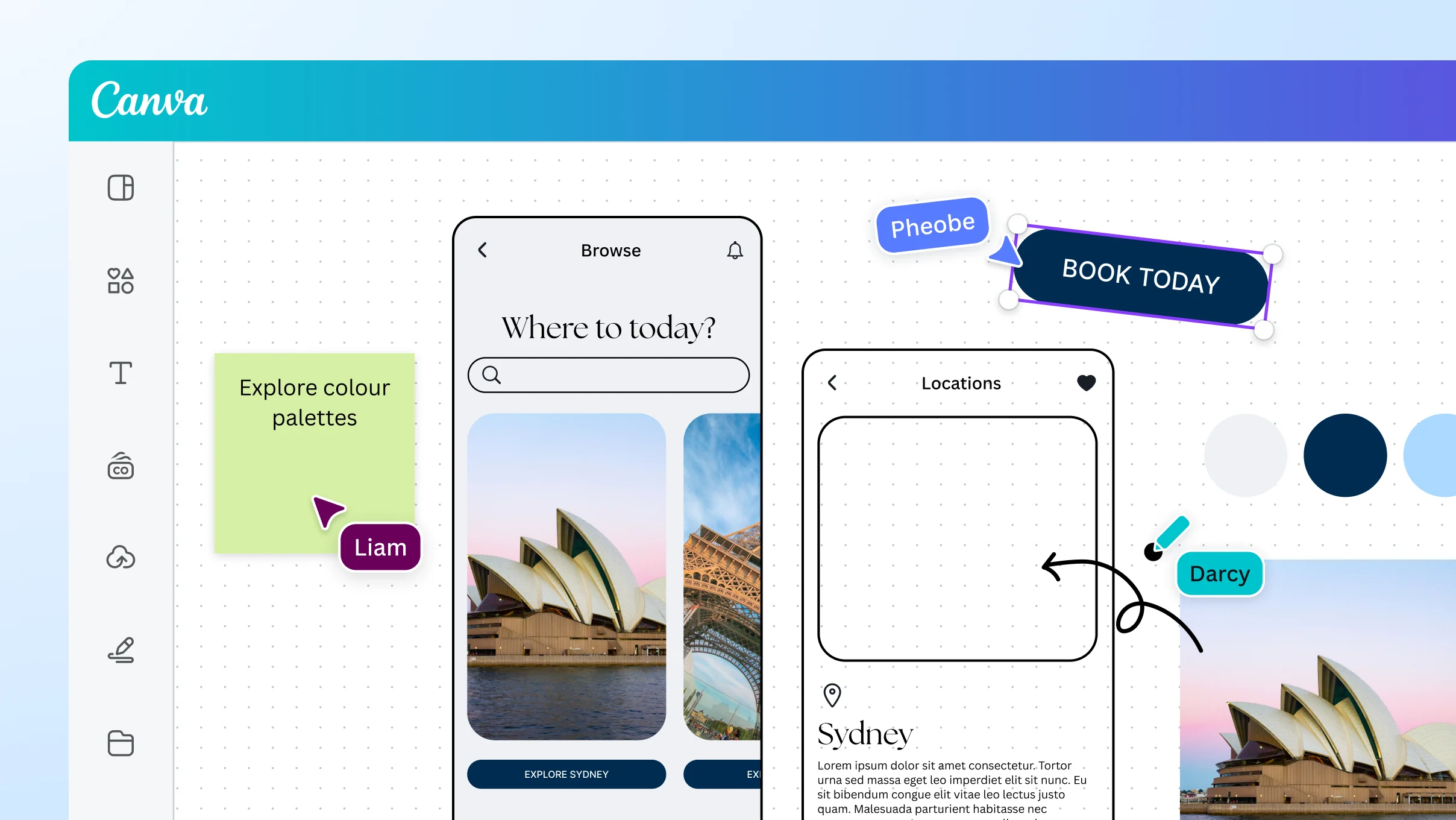
Canva grew because you could sit down and produce something presentable in minutes, birthday card or quarterly report. If your product isn’t creating repeatable value, you have a usefulness problem, and no marketing campaign ever invented can fix that. You can pour money into ads, hire a growth team, hire a growth team to manage the growth team, and still watch people drift away, because the product itself is giving them no reason to stay.
This is also where ICPs trick you. You may be delivering tremendous value to people who love your product but who are not your ideal customer. They showed up, stuck around, and tell their friends, which is lovely, but they’re using the product in a way that doesn’t match your business model, or they’re a slice of the market that won’t grow, and now you’ve built a company around them without noticing.
Notion caught this one. They originally pitched themselves as an all-in-one workspace, which is a bit like pitching a restaurant as “food.” When they watched how people used it, they noticed the most engaged users were teams running project management and knowledge sharing. So they doubled down on those use cases, sharpened the features and messaging, and watched organic, product-led growth do the heavy lifting. The whole thing ran on a tighter match between product and audience, and Notion never needed a scattershot acquisition spree or a desperate TV spot.

Narrow pain makes you useful and broad pain makes you an ally. Useful tools get churned the moment something cheaper comes along, while allies get kept.
What are the best practices for scaling community-led growth in a tech startup?
The product isn’t the only thing you can scale too early. Your community is just as guilty, and scaling community-led growth in a tech startup starts with the same three foundations I walk founders through at Stateshift, applied to the community itself. Define the practitioner the community is actually for, so you’re building a room with a clear reason to walk into it.
A generic “developer community” that nobody belongs to has no such reason. Make the onboarding into that community embarrassingly simple, with an obvious first action, a visible first win, and someone who replies. Then deliver repeatable value week after week: useful conversations, shipped improvements that came from member feedback, and content members can actually use in their job on Tuesday morning. Our view is that a community hasn’t earned the right to scale until you can connect it to product adoption and revenue. A bigger member count on its own just means you now have a bigger room to be disappointed in.
Treating community as a megaphone is the scaling mistake. Community-led growth works when members get real, specific value from being there, when the ICP supplies the loudest advocates, and when you resist the urge to open the floodgates before the room is any good. Consistency is not sexy. Amazon delivers fast, Spotify keeps you entertained, and McDonald’s fries taste the same in Tokyo as in Toronto. None of that is thrilling to write about, which is precisely why it’s a moat. Everyone wants to launch a viral campaign. Almost nobody wants to spend a decade making sure the thing works every single time. The few who do that boring work end up with the brands you can’t dislodge.
What startup scaling actually looks like when it works
Wanting more users, more revenue, and more impact is fine. Treating scale as the goal is where it goes wrong.
Scale the wrong thing and you make a bigger mess. When the product is loved, the audience is the one it was built for, onboarding earns trust in minutes, and the value repeats, growth becomes the thing that happens while you’re busy getting the fundamentals right. That is what sustainable startup scaling looks like, and it is almost always less glamorous than the LinkedIn posts.
So before you book the growth consultant, fire up the paid campaigns, or redesign the homepage for the fourth time this quarter, make sure the three foundations are in place:
- A clearly defined target audience
- Onboarding so simple it’s almost rude
- Repeatable value that gives people a reason to come back.
Miss one and no budget on earth will save you. If you want a second pair of eyes, Stateshift runs a free Blind Spot Call where we pick through your product and your developer engagement and hand you recommendations you can act on within a week. It’s an audit, not a sales call, so no pressure.
Common Questions On Scaling A DevTools Startup
What does it mean to scale too early?
Scaling too early means spending money to bring in more people before the product is loved, the audience is defined, and the onboarding works. All it buys you is a bigger crowd walking out the door. Startup Genome’s research on more than 3,200 high-growth tech startups found that about 70% scale prematurely.
What should a startup get right before it scales?
At Stateshift we recommend three things: a clearly defined target audience, onboarding simple enough that a new user gets something useful within ten minutes, and repeatable value that gives people a reason to come back. Miss any one of them and growth just gets you to the cliff faster.
How do I know if my ICP is right?
Treat your first ICP as a hypothesis. Expect heavy revisions in the first ninety days and smaller calibrations after that, with a monthly check against content performance, sales feedback, community noise, and churn.
How can I tell if low retention is an onboarding problem or a product problem?
Put an early user on a call, give them a task, and watch without explaining. In my experience, when most users drop at a single step, it points to a product defect rather than a content problem, and no amount of in-app copy or tooltips will rescue you.