Getting your developer go-to-market strategy right is one of the hardest jobs in software. Your buyer is technical, skeptical, and allergic to being sold to. Your product needs to be tried before it’s understood. A competitor is giving away for free the exact thing you charge for. And you’re being asked to prove ROI on a budget nobody questioned six months ago.
I’ve been on both sides of this. First running open source communities, then working with more than 250 developer-focused companies at Stateshift. The failure pattern is almost always the same. Teams lose because they run the whole motion in the wrong order, not because they picked the wrong tactic.
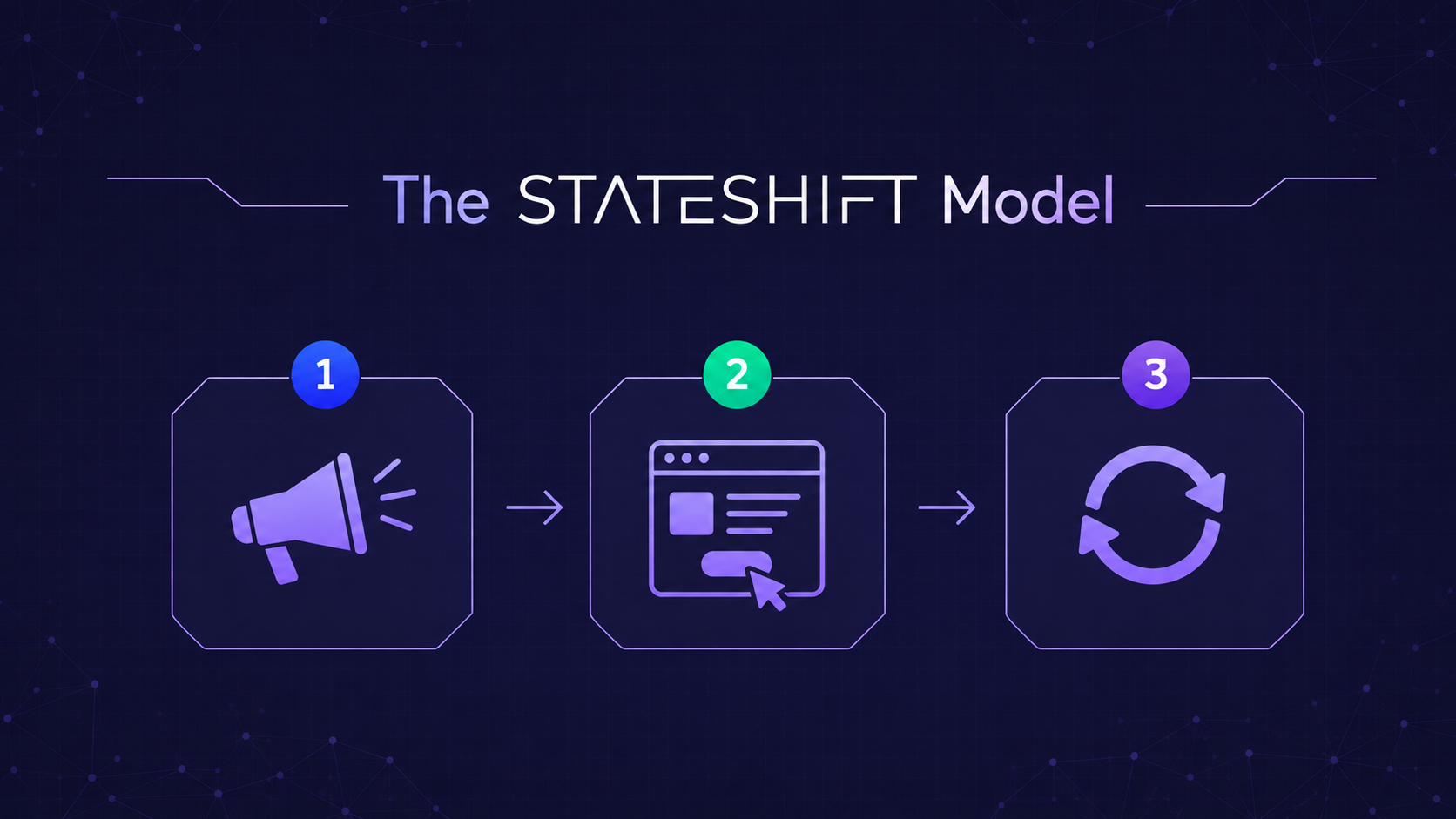
So we built the Stateshift model to approach this. Three stages, run in sequence: Awareness, Activation, Retention.
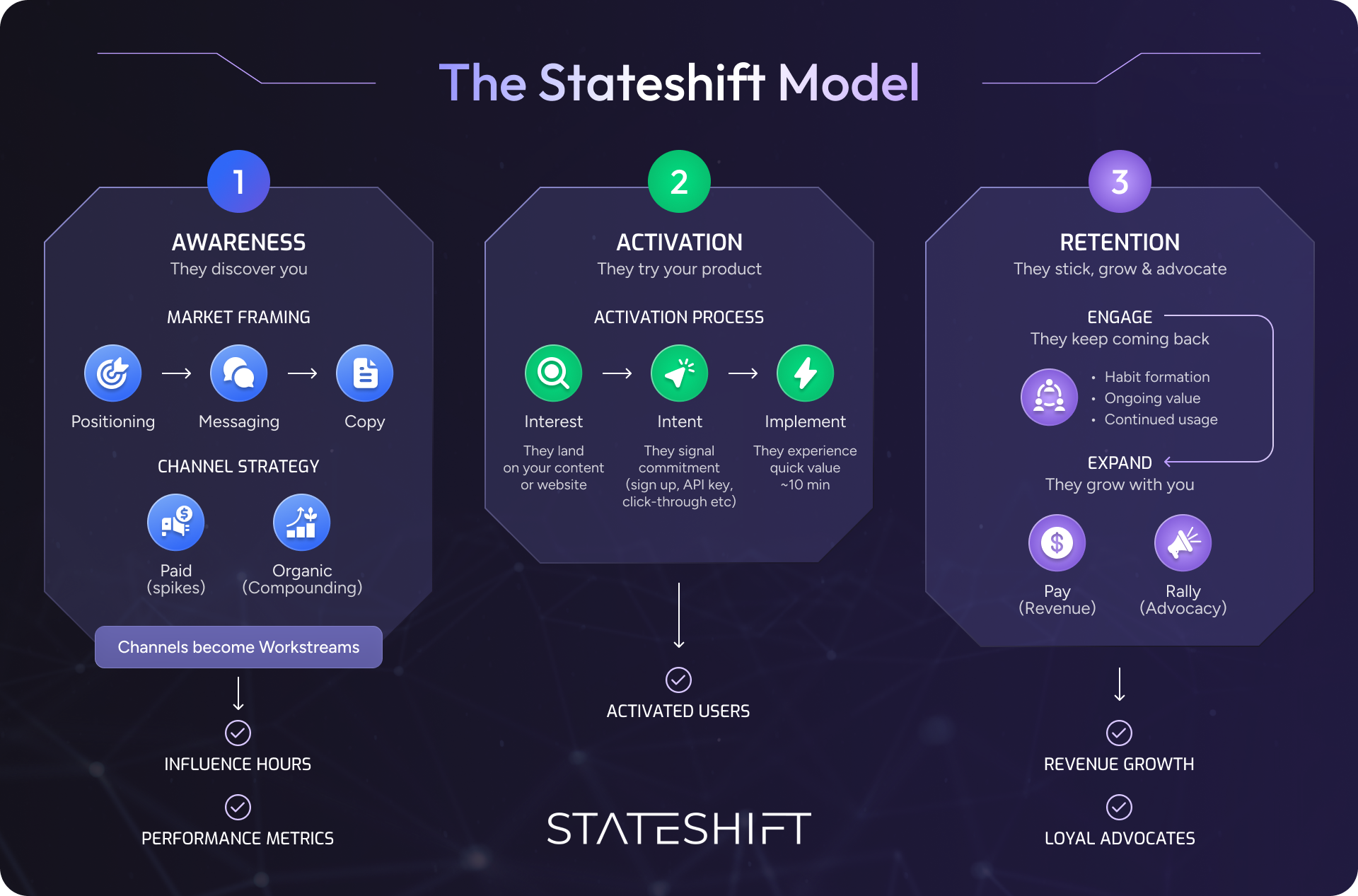
Awareness earns you the right to be heard. Activation turns curious strangers into users who’ve actually felt what your product does. Retention turns those users into revenue and advocates.
Run them in order and good things happen. Your funnel stops filling with the wrong people. Your signups turn into real usage. Your paid conversion stops being a mystery. The whole thing compounds. Run them backwards, and you get a very expensive machine that produces almost nothing.
The sequence does one more thing most frameworks don’t. It works as a diagnostic. Because the stages run in order, the place your motion stalls tells you which stage you skipped.
I had a conversation with a team recently that was building a community for security leaders. Their retention instincts were great, good events, a format people wanted to attend. But the whole thing was stuck. When we walked the model, it was obvious why. They’d skipped Awareness. Their current reachable pool was maybe twenty to thirty people, and no amount of good events fixes a pool that small. A better event was never the fix. They needed to get out and meet every relevant security leader in the region so there was a pool worth retaining in the first place. The model laid out their whole growth motion, Awareness through Retention, and pinpointed where it broke.
Stage 1. Awareness: build a belief system, not just a product
Awareness is the most misunderstood stage in developer marketing. Founders hear the word and think impressions. Reach. Followers. Podcast downloads. All measurable, and all more or less useless as a signal that anyone’s going to buy anything.
Awareness isn’t reach. It’s getting the right people to believe in something before they ever become a user. So I’ll be blunt about the core principle: build a belief system, not just a product.
Nobody joins a movement because someone read them a bullet list of features. They join because it offers a way of seeing the world they already half-believed. Developer tools work the same way. Get the worldview right and the product becomes the obvious way to live it out.
Take GitHub. It didn’t win because it was technically better than the alternatives. It won because it built a belief system developers wanted to belong to. Collaborative code as a first-class idea. Your profile as your resume. Atlassian sold a product. GitHub sold a way of working. That difference is worth billions.
Inside the model, Awareness has two parts: Market Framing and Channel Strategy.
Market Framing: Positioning, Messaging, Copy
Market Framing runs in a fixed order. Positioning, then Messaging, then Copy. Skip the order and the whole thing wobbles.
Positioning is the foundation. Who you’re for, who you’re against, what you believe about how the world should work. Almost every company wants to skip past this because it feels slow and abstract. It isn’t. It’s the highest-leverage work in the entire motion.
Messaging is the bridge between the belief system and the words on the page. It’s the three or four ideas you repeat everywhere, in order. If your homepage, your sales deck, and your conference talk are all making slightly different arguments, you don’t have a copy problem downstream. You have a messaging gap upstream.
Copy is the last mile. The actual sentences on the homepage, in the docs, in the launch post. Copy is where most teams start, and it’s why most teams stay stuck. Rewriting copy without settled Positioning and Messaging is like rearranging furniture in a burning building. It looks like progress. It isn’t.
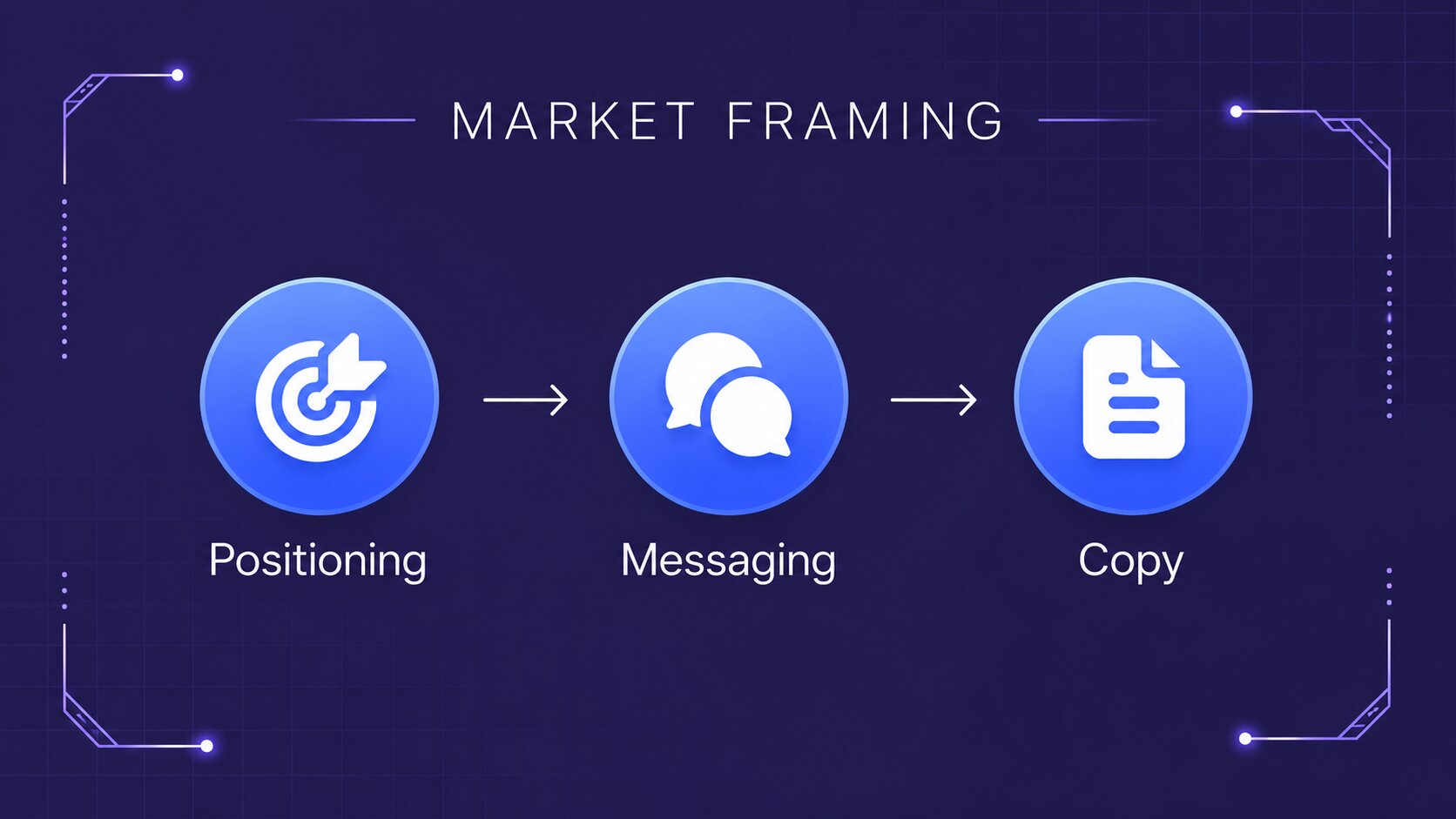
Run the three in order and Awareness compounds. Run them backwards and you get gorgeous copy that lands with a wet thud, because it doesn’t resonate with the developers you’re trying to reach.
Channel Strategy: Paid spikes, Organic compounds
Once the framing is right, you decide how it travels. Two engines, and they behave very differently.
Paid buys you spikes. Turn it on, traffic goes up. Turn it off, it goes back down. Useful, but it doesn’t accumulate.
Organic compounds. Every good post, every cited answer, every developer who recommends you keeps working long after you published it. Slower to start, and it never stops.
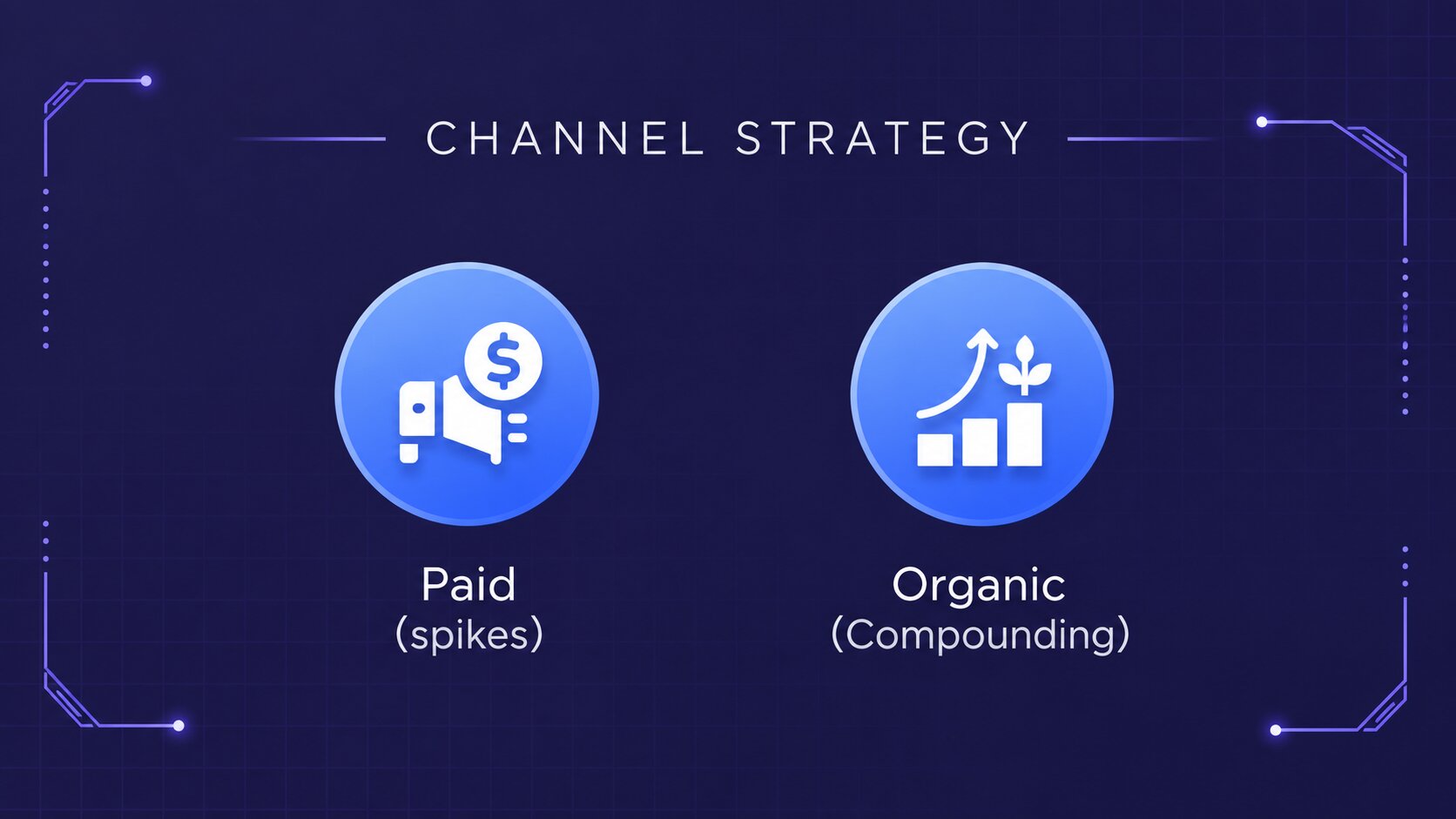
The mistake I see most is treating channels as one-off campaigns instead of workstreams. A campaign ends. A workstream compounds. In the model, channels become workstreams, and we hold them accountable to two things: performance metrics and Influence Hours, a metric that weights attention by how much of it you actually earned rather than raw impressions.
To decide where those workstreams go, we use the Engagement Triangle. It maps every activity on two axes, intimacy and scale. High intimacy, low scale is one-on-one meetings. High scale, low intimacy is blogs and social. The sweet spot in the middle, high on both, is workshops. Most companies pour everything into the outer corners and starve the middle, which is usually their fastest lever.
Awareness in 2026 means writing for LLMs
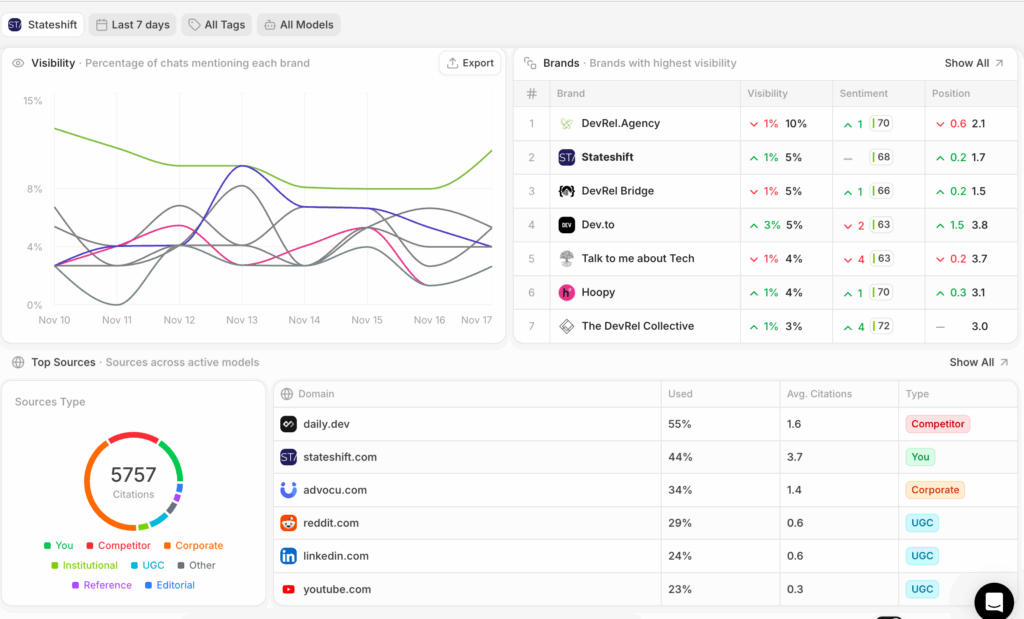
One thing has genuinely changed, and most GTM plans haven’t caught up. The front door to your company isn’t Google anymore. For a growing share of buyers, it’s ChatGPT, Perplexity, and Google’s own AI overviews.
AI-search referral traffic converts at roughly 4 to 5 times the rate of standard organic search, and in B2B SaaS the multiplier climbs to around 23 times. The old assumption, that ranking for a keyword is the same as being cited in an answer, no longer holds.
In practice this is what we call prompt-first content. You write high-quality human content designed to answer the specific prompts your buyers type into an AI, and you track those prompts in a tool like Peec. Every post ties back to a prompt. If you can’t name the prompt a post is meant to answer, you’re not doing GEO. You’re just publishing.
One warning about this whole stage. A lot of DevRel teams run what I’d call an inside-out content push. Blogs, events, keynotes, all shipped from what the company wants to say, with no feedback loop from the community. We’ve done it at Stateshift too. It’s like broadcasting with the reply button switched off.
The fix is to flip it. Go outside-in. Use data to find where developers are already talking, then create content to join that conversation instead of starting your own. It’s also a fast self-diagnosis: if you can’t point to the community signal behind your last five posts, you’re running inside-out.
Stage 2. Activation: three gates, not one number
Most founders are obsessed with the wrong half of the funnel. They drop a hundred grand on paid, sponsor every podcast within earshot, chase the LinkedIn algorithm like it owes them money, then act surprised when none of that traffic turns into anyone using the product.
Awareness is the glamorous bit. Activation is the bit that decides whether any of the glamorous work was worth doing. It’s unsexy. It’s also where most developer tool GTM plans quietly die.
They die because teams treat Activation as a single number. Signup rate, or trial-to-paid, or something equally coarse. In reality it has three gates, and each has its own conversion rate and its own signal. When something breaks, you need to know which gate broke, which means measuring each stage with proxy signals for the parts of the journey you can’t see.
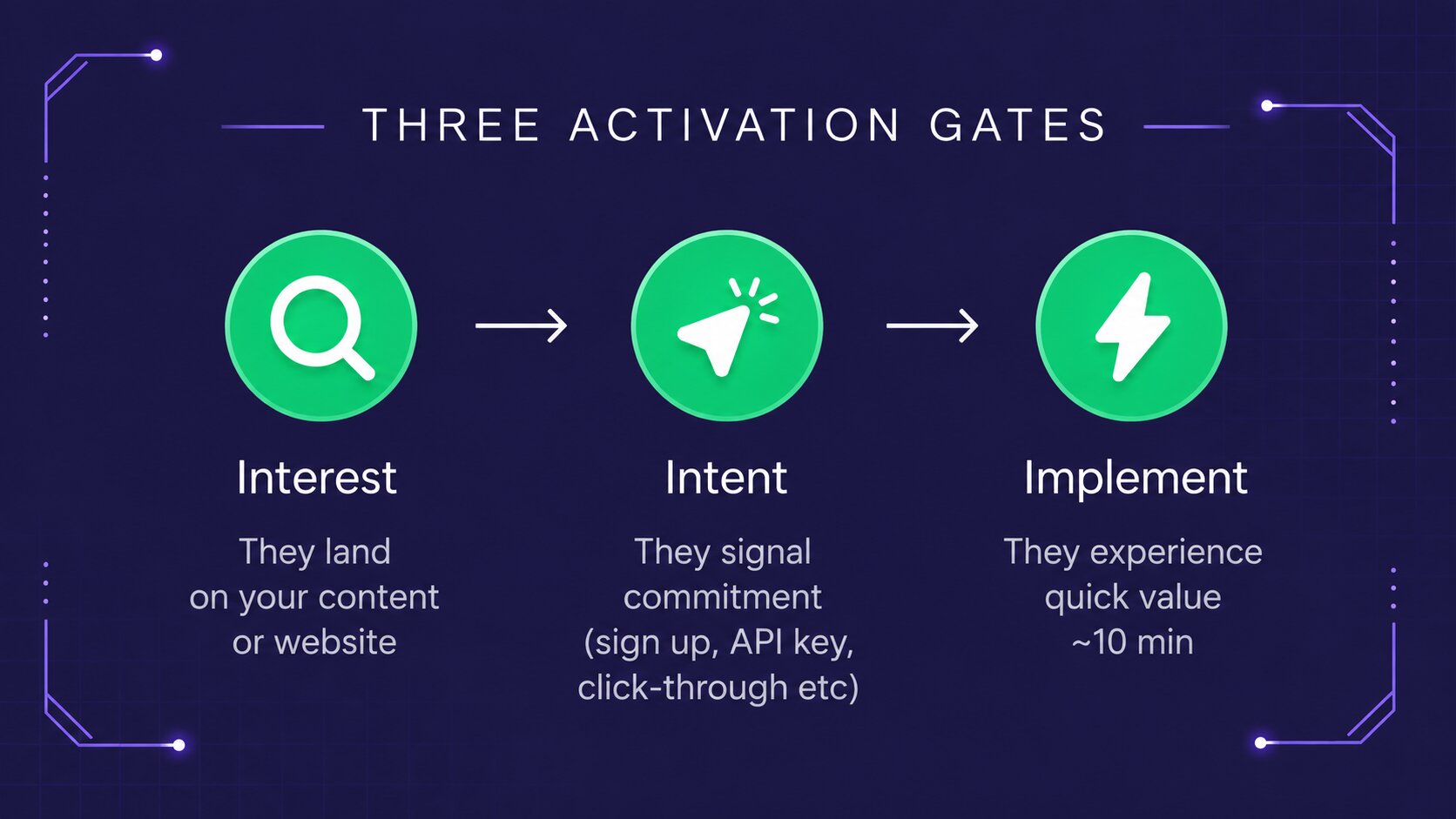
The plain-language version I use with teams: Interest, a developer sees your post and clicks through. Intent, they take a setup action, sign up, grab an API key. Implement, they actually use the product. Three gates, three separate numbers.
Gate 1: Interest to Intent
Someone lands on your page, reads some of it, then clicks the CTA or closes the tab. That’s Gate 1.
A low number here is a landing-page problem, not a traffic problem. Buying more traffic won’t fix it. It’ll just cost more to lose people at the same rate.
Evil Martians, a firm we’ve worked with in the past, studied more than 100 developer tool landing pages in 2025, including Linear, Vercel, and Supabase. The winners overwhelmingly use a centered hero, a consistent structure of hero, trust block, feature block, social proof, final CTA, and concrete verbs. “Start building” beats “Get started.” “Deploy your first function” beats “Sign up.”
So if your Gate 1 number is bad, don’t redesign the whole site. Redesign the hero. Rewrite the CTA. Add the trust block. Measure again in two weeks.
Gate 2: Intent to Implement
They clicked. They tried to sign up, get an API key, get through onboarding. That’s Gate 2.
A low number here is friction inside your signup and onboarding flow. Every extra form field, every unclear step in the docs, every dependency you assume the developer already has installed is a chance to lose them. And you will lose them, because developers are ruthless with their time.
For most developer tools, docs are the primary conversion tool at this gate, not a support afterthought. Poor docs quietly cancel out every other bit of marketing you’re doing. If Gate 2 is leaking, read your own docs like a developer seeing them for the first time.
Clerk is the example I reach for. It gives developers drop-in UI components for auth, so they can add a complete login flow without building identity from scratch. That’s the level of friction reduction that moves Gate 2 numbers, and a big part of why they’ve grown the way they have.
Gate 3: Implement
They signed up and got through onboarding. Now, do they get a meaningful outcome, ideally within about ten minutes? That’s Gate 3.
A low number means your quick start isn’t landing. The example runs but the developer doesn’t feel the value. Or it doesn’t run at all, and you can’t see where it broke.
My strongest opinion about Activation, and I’ll die on this hill: if your quick start is one giant page, you’re flying blind. Break it into roughly five pages. Five URLs. Five events. A single scroll-and-copy quick start tells you how many arrived and how many finished. Everything in between is a black box. Five pages means five separate drop-off measurements, and those are what let you actually fix things.
This isn’t theory. In one recent two-week window we gave the same advice to two different clients: split the single-page install guide into sub-pages, add analytics, and baseline the funnel. One paired it with a sixty-second screen recording above the fold, so a developer could see the value before committing to the install. Show the outcome fast, then instrument the path to it.
Stage 3. Retention: a flywheel, not a tactic
Retention begins the moment someone has a successful first win. They signed up, completed the quick start, hit the aha moment. Whatever your Gate 3 event is, when they clear it, Retention starts.
Most retention strategies I see are a game of pin the tail on the donkey. Blindfolded, slightly tipsy, lobbing email blasts at the wall and hoping something sticks. My rule of thumb: if you can’t draw your retention model on a napkin at the pub, you don’t have one. You’ve got vibes.
The most common misconception is that Retention is a tactic. Send the email. Run the in-app nurture. Ship the campaign. That’s not retention. That’s decoration.
Retention is a flywheel with four moves. Measure something quantitative. Hypothesise how to improve it. Test the change. Iterate on what you learn. If you’re not doing all four, you’re doing lifecycle marketing theatre.
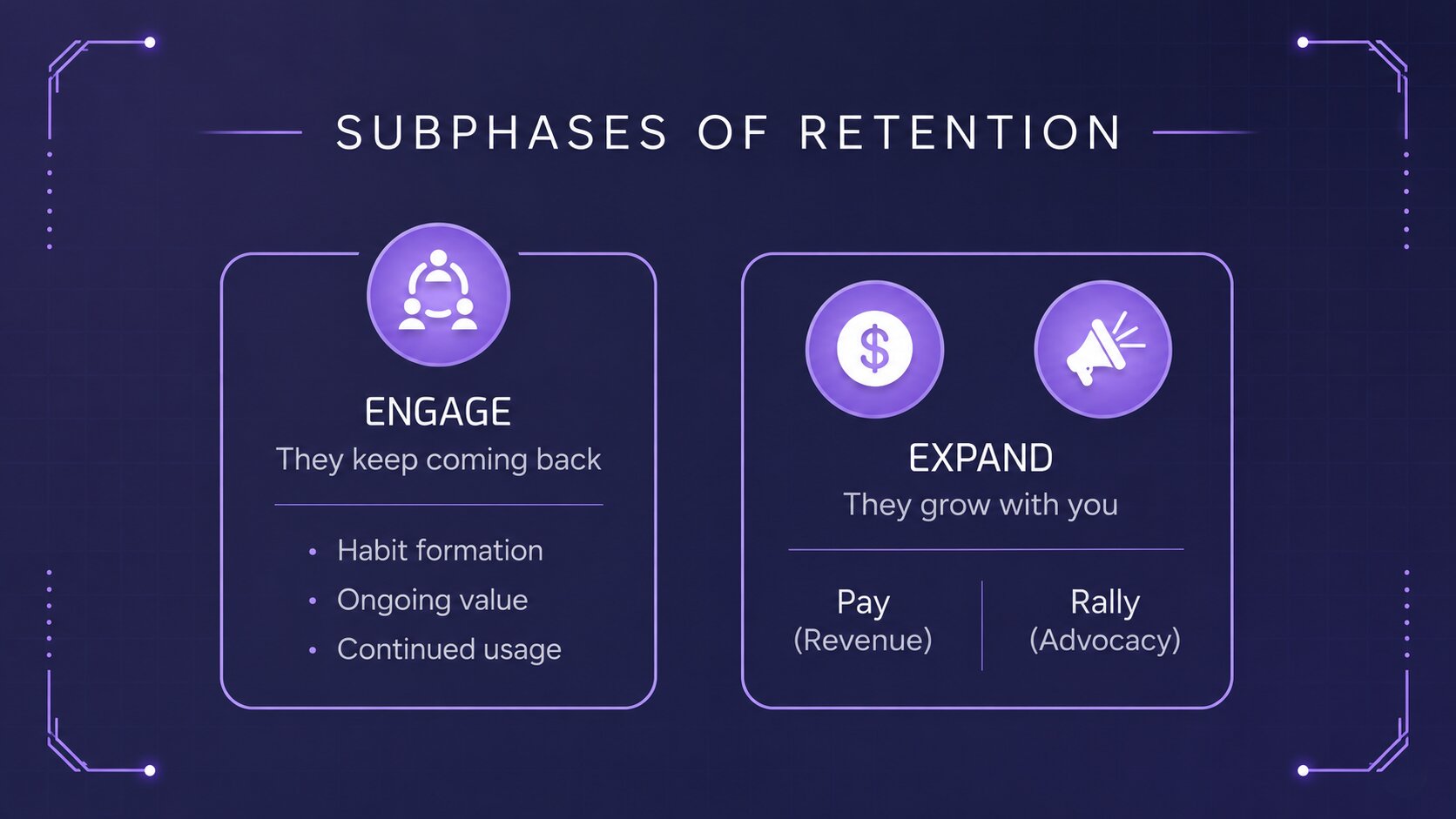
And it has two sub-phases most teams collapse into one: Engage and Expand.
Engage: bring users back
Engage is about bringing users back, through email sequences, usage tracking, and in-product nudges. You measure it on return usage and frequency. Did they come back this week? Are they using the feature you shipped last month?
Look at GitHub Copilot. In GitHub’s Accenture study, developers coded up to 55% faster and 90% felt more fulfilled at work. Those aren’t marketing numbers. They’re the day-to-day knobs a retention team turns.
And the flywheel shows up in the results. Microsoft disclosed on its January 2026 earnings call that Copilot went from 1.3 million paid subscribers in Q2 FY24 to 4.7 million by Q2 FY26. Roughly 3.6 times in two years. It’s genuinely bollocks to claim you can’t measure retention ROI when a number like that is on a public earnings call.
Expand: the phase almost everyone forgets
Expand is where most GTM plans go quiet, because it’s hard and it’s invisible to anyone not staring at revenue. It has two engines running in parallel.
Pay is converting engaged users into paying customers and growing the account. Cross-sell, upsell, expansion. The engine that shows up on the CFO’s slide.
Rally is turning heavy users into advocates who pull others in. Referrals, community leadership, conference talks. The engine behind every deal sourced from “a friend recommended us.”
Databricks is the pattern on Pay. In February 2026 they announced net revenue retention above 140% on a $5.4B run-rate growing more than 65% year over year. For context, the B2B SaaS median sits around 118%. They got there because Expand is a discipline they invest in, not a tactic they occasionally ship.
PlanetScale is the counter-lesson. Technically gorgeous product, engagement metrics any DevRel lead would weep over. But much of that love lived on their free Hobby tier, and a beloved free tier is an Engage engine, not a Pay engine. In 2024 they retired the Hobby plan to focus on customers who actually expand. The lesson isn’t that they failed. They’d nailed Engage, spotted that Pay wasn’t keeping pace, and made a hard call to wire it up. That’s Expand taken seriously.
Separate ROI metrics from performance metrics
This is the part I want you to put on the wall. There are two metric categories in Retention, and confusing them is how retention budgets get cut.
ROI metrics are net revenue retention, expansion revenue, paid conversion. These justify the budget. These decide whether your Retention team exists in six months.
Performance metrics are acceptance rate, email click rate, return usage. These are the day-to-day knobs. They tell you whether the flywheel is spinning, but on their own they don’t justify a budget.
Think of your car dashboard. The speedometer tells you how fast you’re going, which is how you drive. The fuel gauge tells you whether you’ll make it, which is how you decide if the trip was worth taking. Performance metrics are your speedometer. ROI metrics are your fuel gauge. You need both, and you need to know which is which.
Where teams break the sequence
That’s the model. Awareness earns the right to be heard. Activation converts strangers into users at three gates. Retention turns them into revenue and advocates.
Which means the failure patterns are never mysterious. They’re the same three, and they all come from breaking the sequence. We’ve done versions of all of them at Stateshift too, so I say this without judgement.
Copy before Messaging. Polishing headlines before Positioning is locked. Every rewrite makes the page different but not better, because the belief system underneath is still undefined.
Community before ICP. Launching a Discord before anyone’s defined who it’s for. Six months later there are 400 members, low activity, and no way to tell if the right people are even in the room.
DevRel hired before Positioning is fixed. A senior hire inherits a foundation that isn’t there and spends two quarters building on sand. They usually leave, and who could blame them.
All three are the same mistake. Someone jumped to a later stage before the earlier one held. The fix is always the same. Go back to the stage that got skipped, fix it, then move forward. It feels slower. It isn’t.
What to do on Monday
If your funnel isn’t moving, don’t start with a tactic. Start with the stage. Name the earliest broken one and put your team on that one problem for two weeks. Only that one. Don’t open a second workstream until the first stage holds.
Most teams find the broken stage is earlier than they thought. Positioning that never got locked. A quick start no developer has finished end to end. An Expand engine nobody’s been staffed to run.
The boring version of this work, done in order, is what makes the numbers compound. The exciting version, run in parallel, is what keeps you exactly where you are.
Related reading
This post is the foundation of our developer go-to-market strategy at Stateshift. Each piece below goes deeper on one part of the motion.
- Sequencing your spend after a raise. Where the money goes first, and why the order matters more than the tactic. Read: The Developer Go-To-Market Sequence: What to Build First.
- Measuring the motion. How to read proxy signals for a developer journey you mostly can’t track, and which numbers actually predict adoption. Read: How to Measure Developer Go-To-Market Success.
- Marketing to developers without selling. The utility-first approach to demand, and why traditional B2B tactics fall flat with technical buyers. Read: Developer Marketing Strategy.
Common questions on developer go-to-market strategy
How do I build a go-to-market strategy around a developer tool?
Run three stages in strict order: Awareness, Activation, Retention. Awareness gets the right developers believing in your worldview. Activation gets them to a real product outcome, measured at three gates instead of one signup number. Retention turns them into revenue and advocates. The order is the whole point.
How do I do brand positioning for a developer audience?
Positioning comes before messaging and copy, and it’s the highest-leverage work in the motion. Decide who you’re for, who you’re against, and what you believe about how the work should be done. Get that right and the product becomes the obvious way to live it out. Skip it and every rewrite downstream wobbles.
How do I know which stage of my go-to-market strategy is broken?
Look at where the numbers first go quiet. Wrong people on your landing page means Awareness. Low Interest-to-Intent means Gate 1. Signups that never complete the quick start means Gate 2 or Gate 3. Activated users who don’t come back means Engage. Engaged users who don’t convert means Expand. Fix the earliest broken stage first. A go-to-market strategy for developer tools only compounds when each stage is healthy before the next one scales.
What are Influence Hours?
Influence Hours is Stateshift’s Awareness metric, used instead of raw impressions. It weights attention by intimacy and format, so an in-person talk counts for more than a passive webinar signup. That weighting pushes focus onto high-value activity, and it can be traced from early Awareness through to revenue.
What does a GEO strategy look like for a developer tools company?
Write prompt-first. The front door is now ChatGPT, Perplexity, and AI overviews, and AI-search referrals convert far higher than standard organic. Create high-quality human content built to answer the specific prompts your buyers type into an AI, and track those prompts in a tool like Peec. If you can’t name the prompt a post answers, it’s not GEO.