
Tell a team they should run a video session for developers, and they picture the last webinar they sat through.
Cameras off. One or two people presenting slides. A Q&A box nobody types in. You’ve probably attended one this week. So have I, and I’m not going to say how many emails I answered during it.
That’s how a developer video strategy usually comes together. A webinar that looks like every other webinar. A YouTube channel because someone’s comfortable on camera. And a workshop that stays on the to-do list because fifty attendees sounds small.
Then the channel goes quiet, the webinar rooms stay half empty, and nobody’s sure what to do next.
At Stateshift, we help teams building for developers run video sessions people actually want to show up for. We’ll walk through the formats worth your time, when each one fits, how we run them differently from the norm, and five questions that tell you where to start.
TL;DR
- Start with the problem, not the format. Pick a specific problem your developers have this quarter, then choose the format that solves it.
- “Webinar” doesn’t tell you much. A facilitated, cameras-on working session builds trust. A cameras-off slide deck with a quiet Q and A tab doesn’t.
- YouTube is your reach layer. It buys reach and on-camera trust that written content can’t match, but it’s not where relationships get built.
- Workshops are the most under-invested format. Fifty attendees looks small next to a view count, and I’ll admit that’s a hard comparison to ignore.
- Launch a channel only when you’re ready. You need a clear purpose, a way to measure it and the stamina to keep publishing.
The three video formats for developer audiences
Developer video strategy comes down to three formats, and each one does a different job.
- Webinars and live sessions: live, online and run with real people on the other end. Done well, it’s a working session. Done badly, it’s a talking head nobody’s watching.
- A video series on YouTube: recorded videos developers can search for and watch whenever they’re stuck. This is how you reach the most people.
- Workshops: a small, facilitated group working through real problems together, live. This is your depth layer.
The tradeoff behind all three is simple. Reach is how many developers see you. Depth is how well they come to know and trust you.
A YouTube video can reach thousands of developers, but they watch it alone and you never find out who they are. A workshop reaches a small group, but you spend real time with each person and see exactly what they’re stuck on.
Reach without depth feels good and changes very little. Depth without reach is hard to grow. Every format is a bet on one side of that trade, so make the bet on purpose and let the other formats cover the gap.
Why most developer video strategies fail, and why video matters so much
Developers still learn from docs first. In the 2024 Stack Overflow Developer Survey of nearly 49,000 developers, technical documentation came in at 83.9% and written tutorials at 68.4%. Video sits behind them, but not far behind: 54.2% named how-to videos and 49.9% named video-based courses as resources they use to learn to code. It’s what many developers reach for when the docs leave them stuck and they want to watch someone work it out.
So why do so many video efforts stall? Most are in trouble before anyone hits record. Nobody decided what the format was for or how they’d measure it, and nobody had the stamina to keep going past the first dozen sessions, when the numbers are still small. If any of those is missing, the effort uses up time and budget and gives you nothing to measure.
Some failures show up after launch, and they hit every format. The idea is weak, and the idea matters more than the production, whether it’s a webinar topic, a youtube video, or a workshop. The promise in the video was never tested on how much the audience actually wanted it, so nobody shows up.
Then there’s the pitch. Developers forgive a rough edit, but they don’t forgive being sold to. And once a session is over, teams often don’t check what happened. Look at show-up rate for live sessions, click-through rate and view duration for video, and follow-up conversations for workshops. Without that, you never learn what worked.
One more thing to say plainly: video can’t rescue weak docs. If your documentation and tutorials are thin, fix those first.
Webinars and live sessions: what a good one looks like
The word “webinar” covers a lot of ground now. It can mean a proper working session, or a cameras-off slide deck with a Q and A tab nobody opens.
A good one starts with an expert-led session on one specific integration problem. Cameras are on, and the group builds the agenda in the first few minutes based on what they’re stuck on. Then the expert works through those problems live while people jump in, share their screens and ask why.
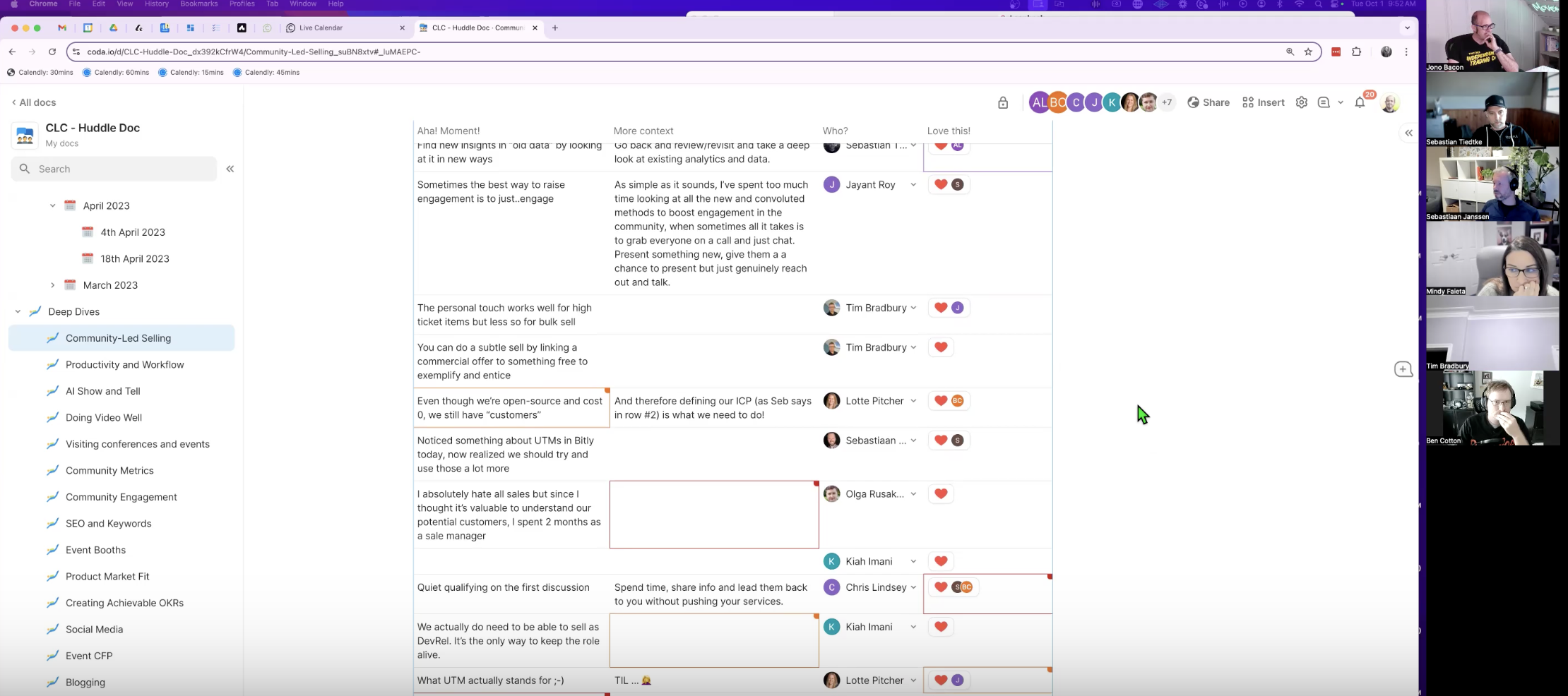
The difference from a workshop is mostly size and who does the work. A webinar is usually the bigger room, with the expert out front and most people watching, and it’s often a one-off. A workshop is a smaller group where people build with the tool themselves, and it works best as an ongoing series.
Our own Stateshift session invites say exactly what people get: Expert training. Cameras on. Group-built agenda. Real problems solved live. A working session, not an awful webinar that you half-watch.
How much trust a webinar earns depends on how you run it. When cameras are on, people see your face, hear the room, and get real answers. When they’re off, it’s passive and is almost like a blog post. People become a consumer and not a participant.
If you can’t commit to facilitation, skip the webinar and put the hour into a workshop or a better YouTube video.
The hidden webinar problem: more than half your registrants never show up
Does a strong registration number mean a strong webinar? Not usually. Livestorm’s 2026 Webinar Benchmark Report analyzed 33,786 sessions from 2025 and found a 47.7% average show-up rate. More than half of the people who registered didn’t attend live. That’s a general B2B figure, not one measured on developers specifically, so read it as a signal.
Most people can relate to why. If you can get the same value from a replay, why wouldn’t you skip the live session? You could watch it at 2x speed while you’re doing something else, at a time that works best for you. Over time, you’ve taught your audience to wait for the recording.
The fix is to promise something the replay can’t deliver. Make the live version a working session where the room does the work, and give people a reason to be there at that time. If the value is in the room, people show up. If the value is only in the slides, they’ll watch the replay.
YouTube: worth it if someone owns it
Almost every team we talk to asks whether they should start a YouTube channel. Usually they already have one. It has six videos, a recorded webinar and a product demo, and no one’s thought about it in months.
So yes, we think it’s worth it if you have someone on the team willing to take ownership of it.
On camera, you bring body language into the interaction, and that builds trust a blog post can’t. Your face does the trust-building while the video reaches thousands of people you’ll never meet in person. It sits below live formats on the trust ladder, but it’s your best scalable layer.

Start with the idea. The idea is the biggest lever on performance, ahead of editing, equipment or budget. A well-edited video on a weak idea is still a weak video.
Test the title and thumbnail before you film. If you can’t make someone want to click, a day of recording is wasted. Then pay off the promise in the first 15 to 30 seconds, because developers decide quickly.
Treat developers as peers. Assume they’re technically competent, get to a working example quickly, acknowledge trade-offs and leave out marketing language. If a video sounds like a pitch, your average view duration will show it.
Learn from every video. Once a video is out, look at click-through rate and average view duration. They tell you whether the idea landed and whether the video delivered.
Point people to it. Let your newsletter and blog send readers to the channel and to your live sessions, so each format supports the others. The channel earns you reach, and the idea decides how much of it you get.
Workshops: small rooms with real developers
My view is that fifty developers in a facilitated, cameras-on workshop, solving real problems with your tool in front of each other, are closer to a decision than ten thousand people who watched one video. That’s an opinion, not a measured conversion rate.
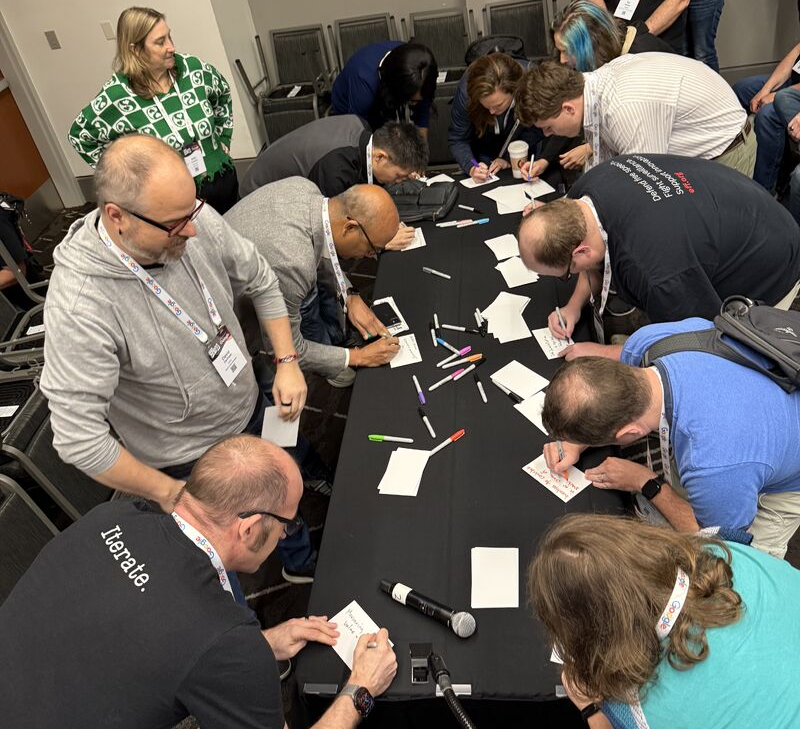
Teams under-invest in workshops, usually because 50 attendees looks small next to a view count. That’s an understandable comparison, but it’s the wrong one.
Most workshops that flop do so for practical reasons, so here’s how to avoid them.
Facilitate it instead of presenting it. If it’s a slide deck with a Q and A at the end, it’s a webinar again.
Run it on Zoom and promote it on LinkedIn. Create a LinkedIn Event on your company page rather than a personal profile, and deliver the session on Zoom instead of LinkedIn Live. The LinkedIn Event helps people find the session and lets you export registrant names and emails, and Zoom runs the session itself. Zoom registration captures emails too, so use whatever fits how you already work.
Make the event image easy to read at a glance. Put the event type in the corner, a bold title, a one-line strapline, and the speaker’s name and photo.
Connect registration to your email. Send each registrant into your email tool with a tag for where they came from, and send a confirmation straight away. Stopping the automation at the confirmation email is the most common way teams waste a good registration page.
Handle the logistics carefully. Send individual calendar invites, never a shared or cc’d one, because that exposes everyone’s email address. Use a redirect page for the join link so you can swap a broken Zoom link without emailing every registrant, and test it before the session.
Nurture before and after. A short sequence beforehand keeps people turning up, and a follow-up afterwards turns attendees into conversations.
Run a workshop that way and you walk away knowing who showed up, what they’re stuck on and who wants to keep talking. A newsletter can feed sign-ups, the workshop builds the relationships and the channel reaches everyone who couldn’t be in the room.
The mix that works for most devtool teams
A sensible starting cadence is one facilitated workshop a month plus consistent on-camera YouTube. We think that combination will outperform five blog posts a week, though that’s our view and not a measured result.
The workshop builds depth with the people closest to adoption. The channel builds reach with people who haven’t met you yet.
Webinars are for when we have something to show, like a release or product update. Workshops are for when developers have something to solve. And having a YouTube channel isn’t a reason to skip live events.
Five questions that pick the format for you
Work through these in order:
- What does your developer audience need from you this quarter that they aren’t getting?
- Does that need require live interaction, or can it be answered async?
- If it’s async, do you have a clear purpose, a way to measure it and the stamina to keep publishing?
- If it’s live, can you commit to real facilitation, or will the session collapse into a passive webinar?
- What will the mix look like six months from now, and what will you measure at month three?
If you can answer all five, you have a developer video strategy. If you can’t yet, pick the one format your team can commit to this quarter, measure it honestly, and add the others later.
Pick one format and run it for a quarter
Start with the one problem your developers are stuck on right now, then pick the format that answers it.
If that problem needs a live room, book one facilitated workshop this month and set up the LinkedIn Event and email tagging before you promote it. If developers can work through it on their own time, write five video ideas and start with the strongest one.
If you’d like to talk through which format fits your audience, Stateshift offers a free Blind Spot Call. You’ll leave with a short, prioritized list of recommendations you can act on within a week.
Common Questions On Developer Video Strategy
Should a devtools startup launch its own YouTube channel or video series?
Yes, if someone on the team is willing to own it. Before you start, make sure you have a clear purpose, a way to measure it and the stamina to keep publishing. At Stateshift, we have teams test the title and thumbnail for one strong idea before they film, then look at click-through rate and average view duration to see whether it landed.
What does a good video strategy look like for a devtools company?
It starts with a problem, not a format. Pick one thing your developers are stuck on this quarter, then choose the format that answers it. A sensible starting mix is one facilitated workshop a month plus consistent on-camera YouTube. That’s the mix we suggest to the teams we work with at Stateshift, though it’s our view and not a measured result.
How do you get developers to attend webinars?
Give them a reason to be there live. If the replay delivers the same value, most people will wait for it. Make the live session a working session, with cameras on, a group-built agenda and real problems solved in the room. That’s exactly how Stateshift’s own session invites are written.
How do devtools companies use video to build trust with technical buyers?
Trust comes from presence. When cameras are on, people see your face, hear the room and get real answers, so facilitated live sessions build the most trust. YouTube comes next, because it puts you on camera in front of thousands of people you’ll never meet.Either way, treat developers as peers, get to a working example quickly and leave the pitch out.
How do you know if your video strategy is working?
Match the measure to the format. Look at show-up rate for live sessions, click-through rate and average view duration for YouTube, and follow-up conversations for workshops. Decide what you’ll measure at month three before you start, so you know what to check when you get there.