
A prospect opens a call by saying “I asked an LLM and it suggested a competitor.” Almost every founder we’ve talked to in the last twelve months has said something similar, and the follow-up question is always the same. How do we get our tool “indexed” by the LLMs, or “picked up,” or on the AI shortlist. It’s moved from curiosity to a standing agenda item on most founder calls.
The question underneath all of it is the same: how to get recommended by AI when a developer asks a tool what to use.
The short version of the answer is that getting recommended by AI is not one great page on your own site. It’s the same tool showing up across the many sources the model already pulls from. We call this source stacking: getting your product named and cited across enough of the pages an AI reads that it starts recommending you on its own. One page can’t do that but a pattern across many can.
SEO trained everyone to optimize the site they own. GEO is bigger than that. The answer a developer gets is assembled from many sources, and your own pages are only a few of them.
The longer version is worth walking through, because a lot of the advice founders are getting right now collapses into “just get on Reddit,” and that’s only a small piece of the picture. Reddit matters. But from our work with clients, it’s a handful of other channels and habits running alongside it that actually moves the needle. Get those working together, and AI assistants start naming your tool on their own.
What happens when your developer tool gets recommended by AI
AI tools recommend the products that show up consistently across the sources they trust, not the ones with the best single page. When a developer asks an AI tool “what should I use to scrape modern JavaScript sites,” the model doesn’t read one page and summarize it. It breaks the question into smaller pieces, retrieves the pages that answer each piece, and surfaces the sources that keep showing up across them. The tools that get recommended are the ones stacked across the most sources, not the ones with the best individual homepage.
This is where the SEO habit has to stretch. With SEO you’d write a pillar post, build a few supporting posts around it, invest in backlinks, and hope Google’s algorithm rewarded the effort on your own domain. GEO is the next layer out. Same instinct, earn authority and answer real questions, now extended past your own site to every source the model reads.
Ahrefs’ Brand Radar study of 15,000 prompts found that only about 12% of URLs cited by LLMs also rank in Google’s top ten for the same query. For ChatGPT specifically the overlap drops to roughly 8%. You can rank on page one and still be invisible in the answer a developer actually reads, because the answer is built from more than your domain.
The other number worth knowing is that roughly 85% of brand mentions in AI answers come from third-party pages, not owned domains. Your homepage is one input. It matters. It’s just outnumbered by everything else the model reads on the way to naming a tool.
A Homepage Doing All the Work
When we started working with Lightpanda, an open-source headless browser for AI agents, this was exactly the shape of the problem. Their own site was working hard. Their outside presence was thin. No Reddit footprint. Almost nothing on the independent comparison sites and community threads that AI models lean on when a developer asks about scraping tools. So Lightpanda showed up on the queries where it already had some outside validation, and went quiet on the ones where it didn’t.
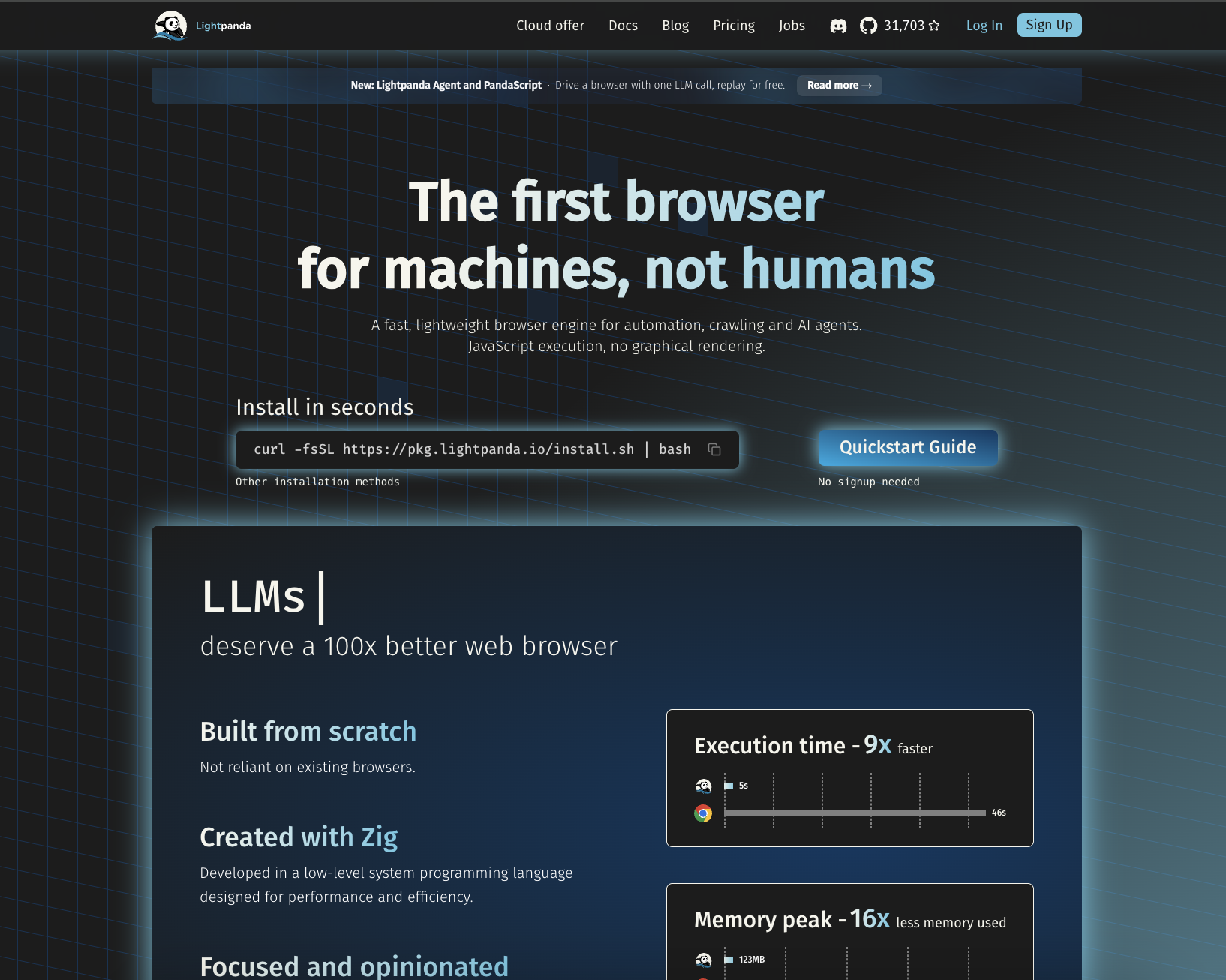
The fix wasn’t to rewrite the homepage in isolation. We updated the homepage, helped them published blog posts aimed at the questions developers were actually asking their AI tools, and stood up two presence strategies that hadn’t existed before. A founder-led LinkedIn presence, and an active, genuinely helpful Reddit presence in the scraping communities. The point was to put Lightpanda in the places the model already draws from, instead of hoping one site could carry the whole recommendation.
The way Jono puts it: the blog content is crucial because it gets indexed into the LLMs, and then it gives you reference material to point to when you go onto Reddit and other places. Blog is the reference layer. Reddit and third-party sites are the citation layer. The two aren’t rivals. They’re the same system.
So do we just need to be on Reddit?
This is the most common follow-up question, and the answer is a firm no, for two reasons.
The first is that a single-channel Reddit play is genuinely exposed. Profound’s analysis of 30 million citations across major AI engines found that Reddit is the top citation source for Perplexity at around 47% of top-ten share, and Reddit accounts for around 0.1% of Gemini citations. Same brand, same effort, wildly different payoff depending on which engine your buyer opens. Meltwater’s analysis of 9.5 million citations goes further and finds that LinkedIn outpaces Reddit specifically on B2B categories like Technology and SaaS. Betting everything on one surface leaves too much on the table.
The second reason is that the version of Reddit strategy most companies default to doesn’t work. Hiring an agency to spam Reddit pretending to be a happy customer who just discovered your product gets flagged fast. Moderators call it out. The community piles on. It can hurt the brand more than help it.
The version that works is slower and more human. Someone posts “anyone have a suggestion for fixing X,” and you jump in as yourself. “Hey, Bob from XYZ tools here, we’ve run into this exact case, here’s how we’d approach it, happy to share more.” Genuinely helpful. Occasionally without mentioning the brand at all, because anyone who clicks your profile should see a helpful person, not a walking ad. Reddit Karma takes time. Five focused minutes a day, in one subreddit where your audience already gathers, is the honest version of the recommendation.
I’ll admit the five-minutes-a-day number is a rough one. Some subreddits reward more, some less. What isn’t rough is the direction: presence has to look like a person, not a campaign.
Why we don’t tell anyone to go all-in on one channel
GEO is won through structure and topic authority, not per-channel tricks. Because the model is reading many places, the durable answer is being useful in many places. A few YouTube videos where developers talk about the product. Explainers on your own blog. A partnership. A G2 page with real reviews. Other review sites. Reddit. LinkedIn posts from your founder and your team, which perform better than the company page in most tests. A podcast interview transcript. A guest post on another blog. Each one is another surface pointing back to you.
G2 in particular is worth taking seriously if you’re a developer-tools company. Kevin Indig’s analysis of software-category citations put G2 at around 22% share of voice for software queries across ChatGPT, Perplexity, and Google AI Overviews. That’s the G2-as-oracle effect. Whether or not the traffic on your G2 page looks impressive to you, LLMs treat that structured review data as a strong citation target. If your page is thin or your review count is low, that’s a fixable gap.
The reason not to bet everything on Reddit, or LinkedIn, or G2 on their own is the same reason we don’t tell any client to bet everything on paid Google. Any single channel can change its policies overnight. Models get smarter at spotting patterns. We’ve watched companies spike on one method and then drop off when the source they leaned on shifted. The system is more durable than the surface.
What to build first, and why in that order
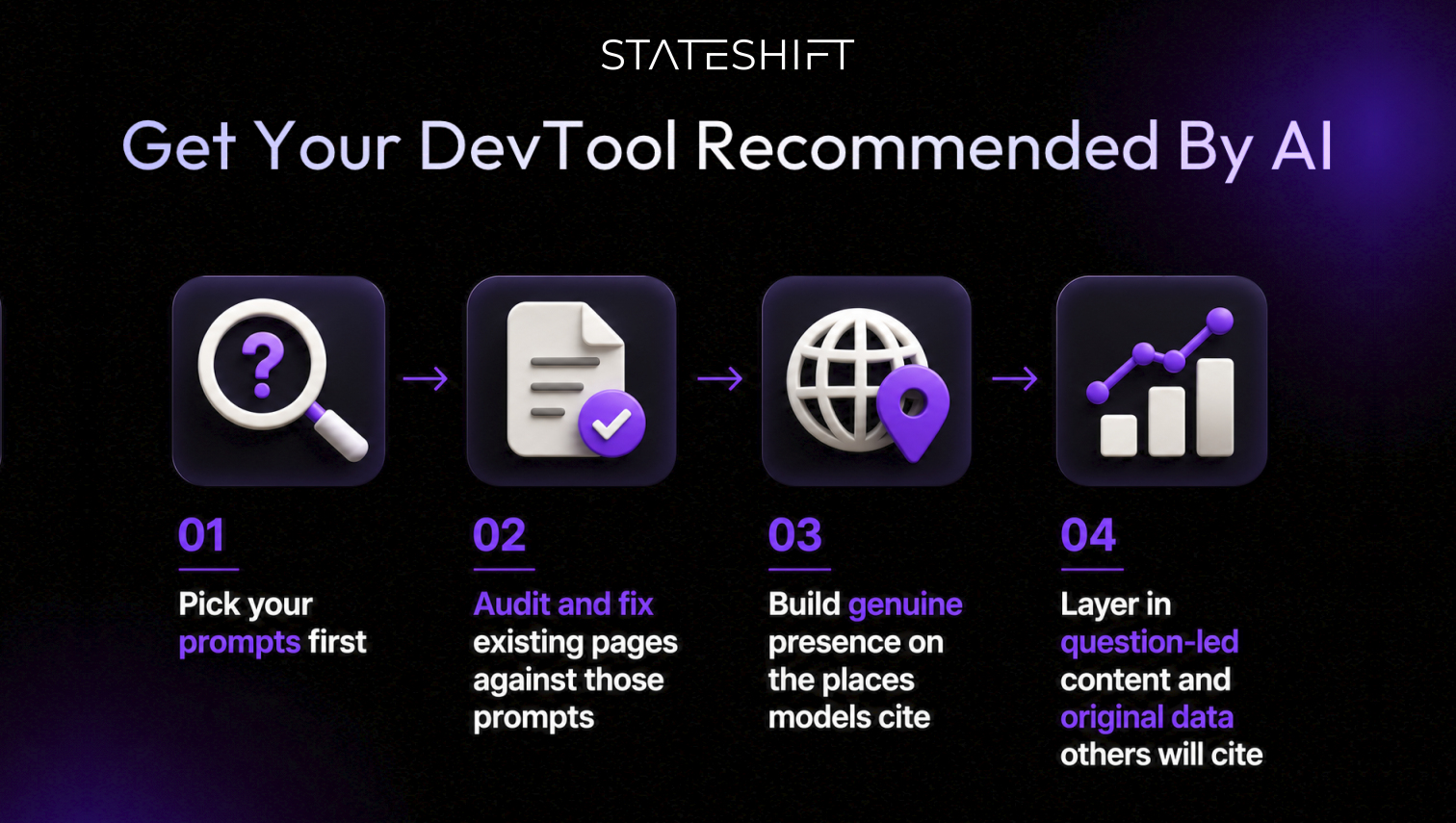
The question we get after all of this is where to actually start. Here’s the sequence we use inside Pathfinder.
- Pick your prompts first. Choose questions your buyers would type into ChatGPT or Claude, and load them into a prompt-set tracking tool. We use Peec at Stateshift. Unlike SEO keywords, the wording doesn’t need to match exactly, because fan-out queries let the model read intent. The trap here is vanity prompts. Some teams load their tracker with questions stuffed with brand names so the dashboard looks great. If you’re tracking 50, it’s fine for maybe five to include your own name, mostly for competitor comparisons. The number that matters is how often your product surfaces as a solution to a genuine buyer question.
- Audit and fix existing pages against those prompts. Take the list and run it against your current blog. Find posts that touch the topic but don’t answer the prompt directly. Rewrite the section that would be retrieved. Add a few FAQ entries at the bottom in the way a buyer would ask. Fix any inconsistencies while you’re in there. This is the cheapest lever and it needs no new content.
- Build genuine presence on the third-party places models cite. Claim and fill out your G2 profile. Post on LinkedIn from named individuals, not just the company page. Show up in one or two community threads a week. Slower, but this is where the source stacking compounds.
- Layer in question-led content and original data other sites will cite. A short research study, a benchmark, a comparison where you test your product honestly against another and publish the numbers. These sit last on the list because they take the most time. They also produce the most unique, citable material, which is why the effort is worth it.
GEO isn’t fast in the SEO sense of waiting a quarter, but the first signals come quicker than SEO ever did. A fixed page can show up as a citation within days of being reindexed. The audits are the quickest lever. G2 reviews and LinkedIn presence compound over weeks and months. In response, your team also needs to move fast. The developers your product needs to reach are already routing tool discovery through ChatGPT, Copilot, and Cursor before they open a browser tab. If your name isn’t in the content those models pull from when developers ask, someone else’s is.
So put the brand where the audience already gathers, consistently and for real. Do that, and getting recommended by AI stops being something you chase. It’s what happens once you’re genuinely part of the conversation the model is already reading.
FAQ
How Do I Get My Developer Tool Recommended by AI
Get named repeatedly across the third-party sources the model already pulls from. At Stateshift, we run this as the GEO Sequence: choose real prompts and track them, audit and restructure existing content to answer those prompts directly, build genuine presence on Reddit and LinkedIn and review sites like G2, then layer in original data other sites will cite. Homepage-only presence rarely moves the number.
Is Reddit really all I need?
No. Reddit is a heavy citation source, but its share swings hard by engine. It’s close to half of Perplexity’s citations and almost none of Gemini’s. Betting everything on one surface means you’re invisible on the engines that don’t weight it. Across Stateshift client work, what we have seen compounds is Reddit plus LinkedIn, review sites like G2, and citable content together. And the presence has to be genuine. Spammed Reddit gets flagged fast and can hurt more than it helps.
How is this different from SEO?
Think of it as SEO’s next layer. Same instinct, earn authority and answer the questions people actually ask, extended beyond your own website to every source the model reads. The shift is where the work happens. Optimizing only your own domain used to be enough. Now only about 12% of the URLs LLMs cite also rank in Google’s top ten for the same query, so your homepage is one input among many. SEO still matters. GEO is what you build on top of it.
How long before I see results?
Faster than SEO, which is one of the real advantages here. Because the model is reading current sources, a fixed page or a new mention can show up as a citation or a brand mention within days of being reindexed. That’s the fast end, and it isn’t guaranteed. More time and more presence raise the odds and the consistency. Auditing and fixing existing pages is the quickest lever. Building presence on LinkedIn, G2, and community threads compounds over weeks and months. The point is you don’t wait a quarter to see the first signal the way you would with SEO.