There is a dodgy bootleg version of Titanic from the 1990s floating around online. It is an animated film clearly designed to cash in on James Cameron’s version. The animation is terrible. The plot makes no sense. And somehow, it has millions of views on YouTube.

Not because it’s original. Because it’s fascinating. People can’t look away from the sheer audacity of it.
That has nothing to do with new features. It has everything to do with psychology. And that same principle is what separates the developer products that win from the ones that get ignored.
The developer products that grow fastest are not the ones shipping the most features. They are the ones that engineer a sequence of psychological triggers, from the first click to the first success, that make developers feel smart, curious, and immediately rewarded.
Most founders think their developer go-to-market strategy is about building better features than the competition. The reality is that most developer products are not being outcompeted on features. They are being outcompeted on how they make developers feel when using their product.
There are five specific ways the best developer GTM strategies do this. And none of them require you to ship a single new feature.
Make Your Users Feel Like Geniuses
People love feeling like geniuses. And nothing achieves that faster than letting them solve a small problem quickly.
Duolingo understood this better than almost anyone. When a new user opens the app for the first time, the very first thing they are asked to do is translate something laughably easy.
You don’t need to know Spanish to figure out that “hola” means “hello.” But the app tells you that you got it right. It celebrates you. And suddenly you feel like you are making progress before you have actually learned anything.
It’s not a gimmick but the core engine behind Duolingo’s growth.
In 2025, Duolingo reported approximately 47.7 million daily active users and 10.9 million paid subscribers, built almost entirely through product-led growth. Around 80% of new users join organically because the product itself creates a feeling of competence that makes people want to come back.
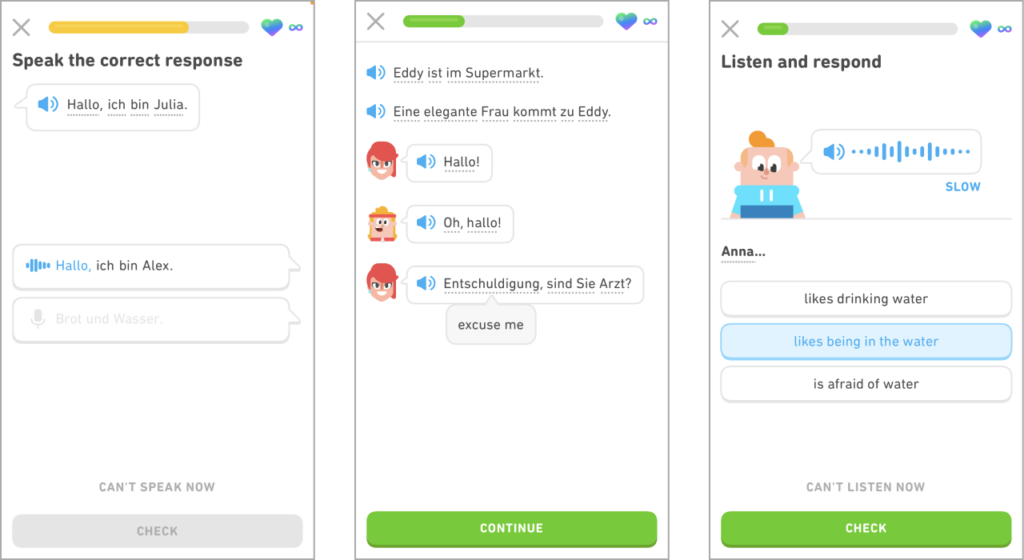
The lesson for you is simple: present your user with a small, quick win right at the start. A quiz. A simple challenge. A result they can see immediately. Everyone enjoys a pat on the back, even if all they did was translate the word “hola.”
This is something we think about constantly with our clients. The teams that struggle with developer adoption are almost always overcomplicating the first interaction. They want to show everything the product can do before the developer has felt anything. The ones that win give developers a reason to feel smart before they have invested any real time. That feeling of early competence is what earns the second session.
The Power of Scarcity
People are fundamentally nosy creatures. We cannot resist a good mystery. And the smartest startups use that instinct deliberately.
Gmail’s launch om 2004 is still one of the best examples of this. Google did not run ads. They did not do a public launch. They gave a small number of people invite codes, and those codes became social currency.
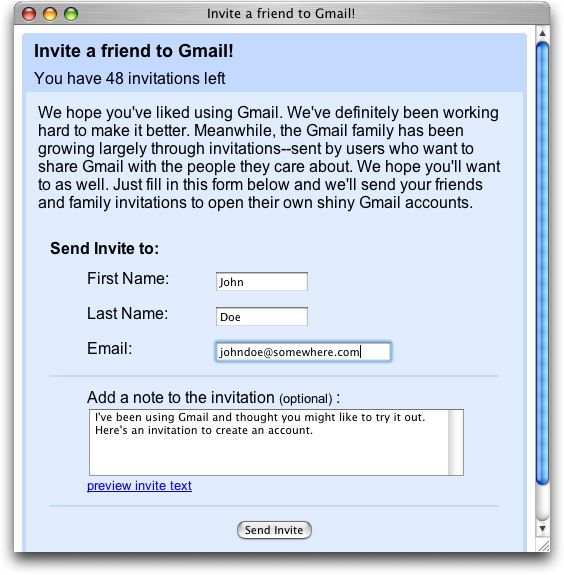
People were begging for Gmail invites. The product was good, but the frenzy was not about the product. It was about the exclusivity. The fact that you could not just sign up made everyone desperate to get in.
What we have learned working with developer tools companies is that scarcity works differently with technical audiences. Developers do not respond to artificial urgency. They respond to genuine exclusivity. If your beta actually has limited capacity because you are iterating with a small group, say that. If you are just hiding a sign-up button to create FOMO, developers will see through it immediately.
The companies that use scarcity well are the ones where the exclusivity is real and the early access genuinely means something.
The First Ten Seconds Decide Everything
Your audience is ruthlessly impatient. The window between “I will try this” and “this is not worth my time” is measured in seconds, not minutes.
Stripe understood this from day one.
Before Stripe, integrating online payments into a website was a nightmare of documentation, banking relationships, and weeks of setup. Stripe reduced it to seven lines of code. A developer could go from “I have never used this” to “I just processed a payment” in under ten minutes.
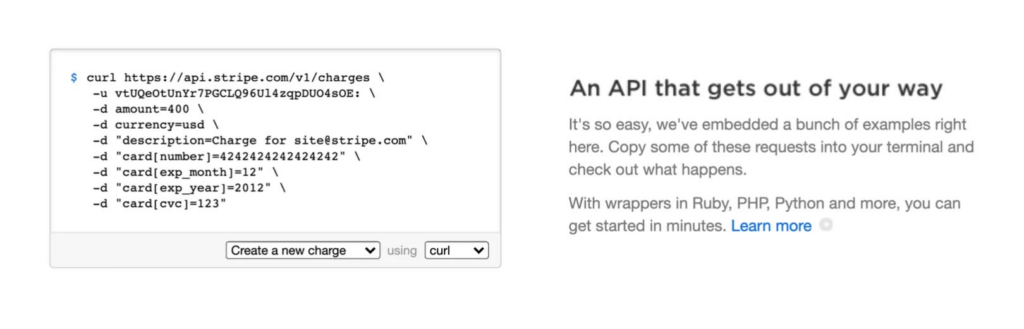
When you make the first experience stupidly easy, you eliminate the most dangerous moment in your entire funnel, which is the moment where the user decides whether to keep going or close the tab.
Most companies lose the majority of their potential users not because they lack product innovation, but because the path from “curious” to “successful” has too much friction in it. The fix is almost always simpler than people think. Free templates. Quickstart guides. Instant results. The payoff must be instantaneous. Your user should think: “wow, that was stupidly easy.”
Why Complexity Is Where Attention Goes to Die
Complexity destroys attention faster than almost anything. And the companies that win in technical markets are almost always the ones that made something complicated feel simple.
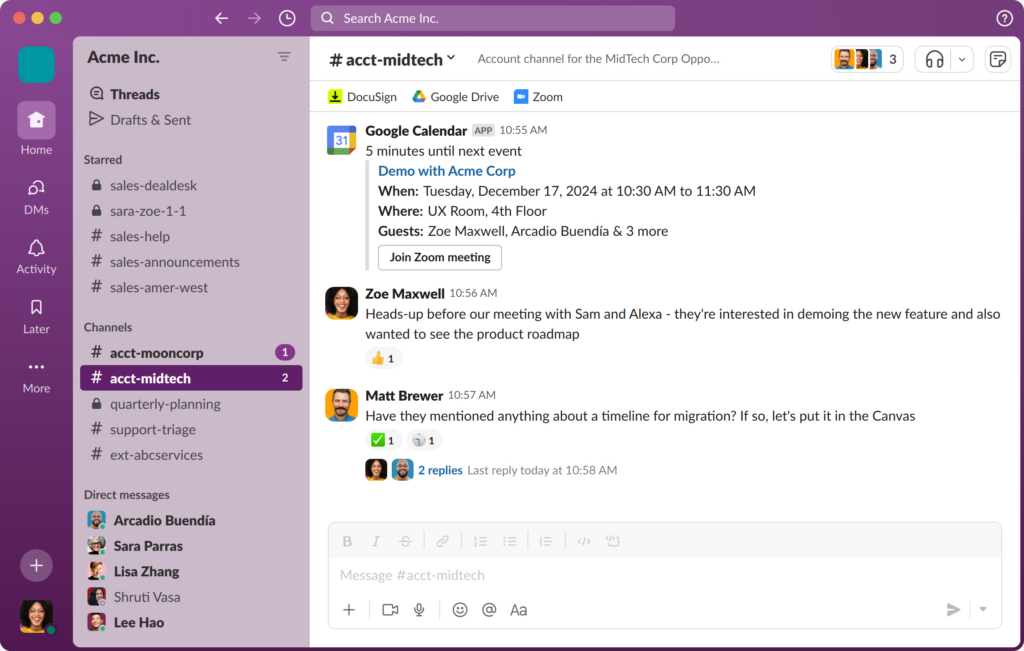
Slack did not invent workplace messaging. IRC existed. HipChat existed. Dozens of enterprise chat tools existed. What Slack did was strip away every piece of clutter that made those tools feel like work. The interface was clean. The onboarding was instant. You could be productive within minutes of signing up without reading a single page of documentation.
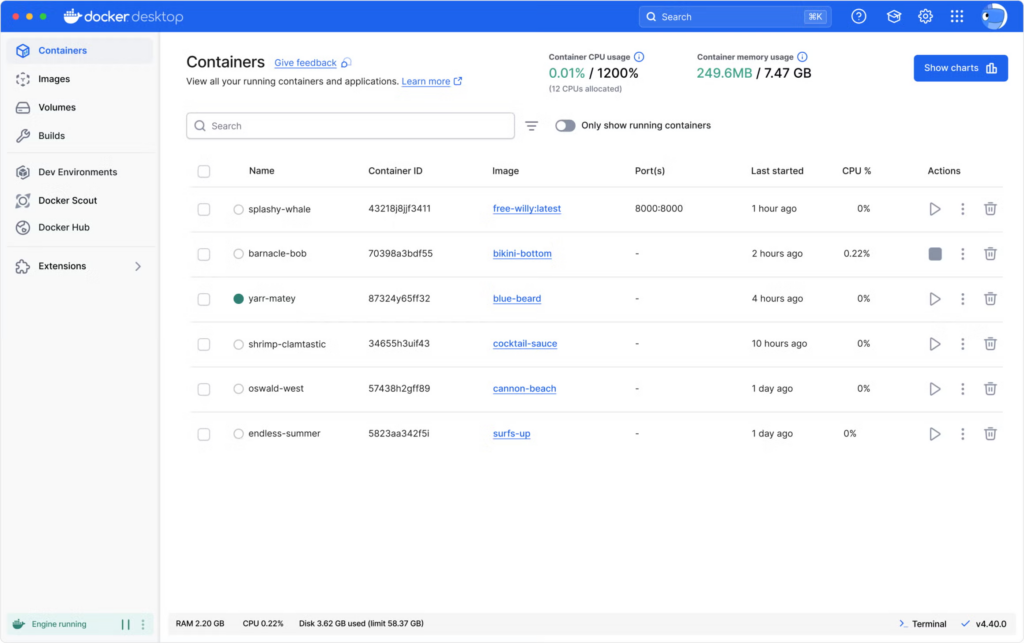
Docker did the same thing for containerization. Before Docker, deploying applications in isolated environments required deep systems knowledge that most developers did not have and did not want to acquire. Docker packaged that complexity into a few commands. Newcomers could deploy applications rapidly without understanding everything happening under the hood.
The principle is the same in both cases: everything unnecessary must go. Your messaging, your tutorials, your product interface. If your user has to spend brain cells figuring out what you even offer, you have already lost them.
The teams that grow fastest are not the ones adding more features. They are the ones focused on stripping away everything that gets between the developer and the outcome they came for. Simplification is not a “design preference”.
How to Apply This
You don’t need to implement all five of these at once. But you do need to ask yourself a few honest questions about how your product makes developers feel in the first five minutes.
Is there a quick win at the start? Something that makes a new developer feel competent before they have invested serious time? If the first interaction with your product requires reading documentation before anything happens, you are losing people before they have given you a real chance.
Is there any friction in the path from “curious” to “successful”? Every extra click, every unnecessary form field, every confusing instruction is a point where you lose people. Most teams underestimate how little patience a developer has when they are evaluating a new tool. The window is seconds, not minutes.
Is your messaging clear enough that someone can explain what you do after reading your homepage for 30 seconds? If not, simplify until they can. Developers are not going to work to understand your value proposition. If it is not obvious, they will move on to the product that makes it obvious.
Are you competing on the same terms as your larger competitors, or have you found a dimension where you can win? The startups that try to outspend the incumbents on their own terms almost always lose. The ones that find a different axis to compete on, whether that is speed, simplicity, or the feeling of being part of something exclusive, are the ones that punch above their weight.
And most importantly: are you putting the fundamentals in place before you start chasing growth? Most startups jump straight to awareness campaigns and launch events while the product experience itself is still losing developers in the first 30 seconds. The awareness, the content strategy, the partnerships, all of that works dramatically better when the experience underneath it is already converting.
Features Matter. Adoption Matters More.
The tech industry has a bias toward believing that the best product wins. It does not. The product that makes developers feel the most capable, the most curious, and the most immediately successful is the one that wins. That is not cynicism. It’s how developer go-to-market actually works.
Because the developer product that wins is rarely the one with the most features. It is the one that made the developer feel like signing up was the smartest decision they made all week.
If you are building a startup and struggling to turn attention into adoption, your GTM probably needs work before your product does, book a call with Jono. We have spent years helping technical companies figure out exactly where the drop-off happens and what to do about it.
Frequently Asked Questions
What is developer go-to-market?
Developer go-to-market is the process of helping developers discover, evaluate, adopt, and advocate for a product. Unlike traditional marketing, developer go-to-market focuses on activation, documentation, onboarding, community, and reducing friction. The goal is not simply awareness, but turning curiosity into successful product usage and long-term adoption.
Do startups need product innovation to succeed?
Not necessarily. At Stateshift, we have found that most startups fail because users never experience the product’s value, not because they lack groundbreaking ideas. Distribution, onboarding, and activation often matter more than constantly shipping new features. Companies that help users succeed quickly frequently outperform technically superior competitors.
Why do technically better products sometimes lose?
Developers do not adopt products based solely on features. They adopt products that are easy to understand, easy to try, and easy to succeed with. Friction, complexity, and poor onboarding kill attention long before users can appreciate technical advantages. Great developer go-to-market strategy removes these barriers and helps users experience value immediately.
What matters more than product innovation?
Product innovation matters, but distribution, positioning, and activation matter more. Many successful companies did not invent entirely new categories. Instead, they simplified existing problems and created experiences that made users feel successful quickly. The startups that win are often the ones that make adoption easier, not the ones with the most features.
Why is onboarding so important in developer marketing?
The first few minutes of a user’s experience determine whether they continue or leave. Developers are highly impatient and will abandon products that require too much effort before delivering value. Effective onboarding creates confidence and momentum by giving users an early success. This activation stage has a larger impact on growth than most companies realize.